Are you planning a winter hike or a longer wilderness trip in Lapland, for example in Urho Kekkonen National Park? For many visitors, the biggest challenge is not physical fitness but understanding snow, cold weather and changing conditions.
In this article, we explain how snow and changing conditions affect winter travel. You will also learn why your choice of equipment matters, and why making realistic estimates of daily distances is one of the most important winter hiking safety skills, especially in areas such as Urho Kekkonen National Park, where rivers, streams and other waterways add an extra element of risk.
Read this before setting out on a winter trip
- Snow conditions vary dramatically in spring. The same route may be easy in the morning and almost impassable by the afternoon.
- Good physical fitness does not remove the importance of conditions. In winter, your pace is determined by snow conditions, not fitness alone.
- Long daily distances (for example, 20 km) are often unrealistic in winter conditions. Sometimes covering 4 km is a success.
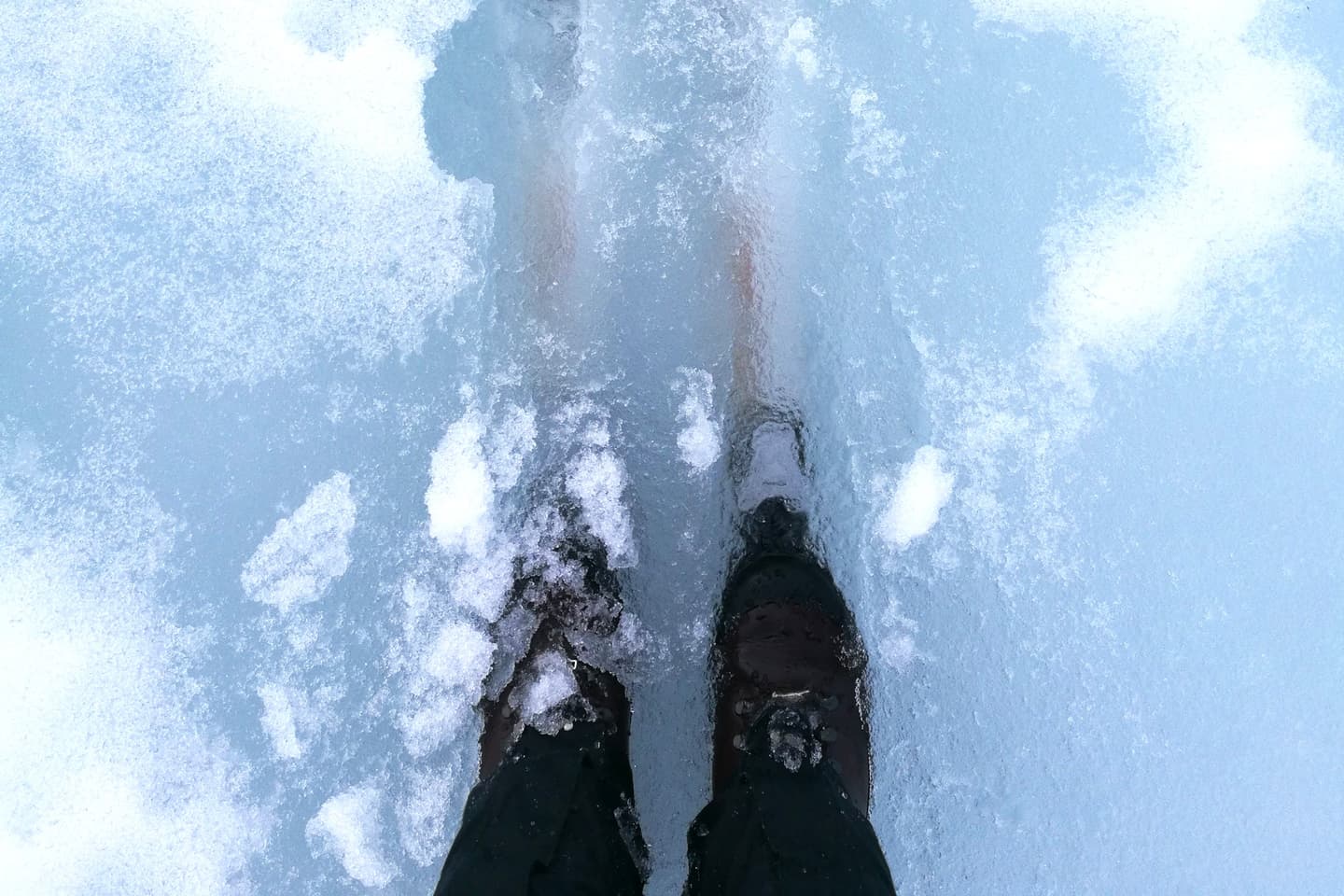
- Lakes, rivers and streams are among the greatest winter hazards, especially in early and late winter. Water may remain on top of lake ice throughout much of the season.
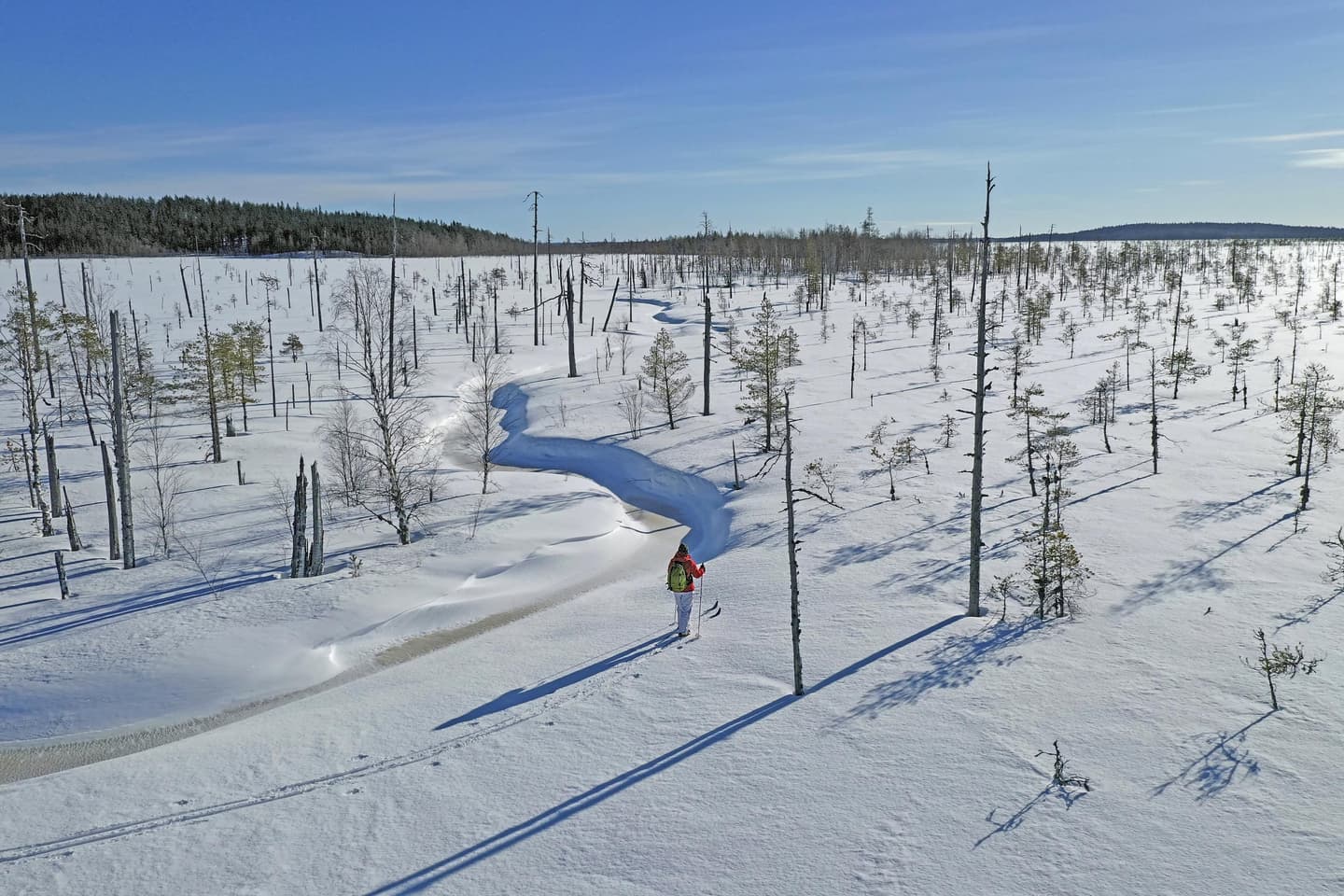
- Reading the terrain becomes more difficult in winter because snow hides landscape features. An open mire, for example, may be mistaken for a pond.
- Equipment choice matters. Snowshoes are often used in places where forest skis would be a safer and more effective option.
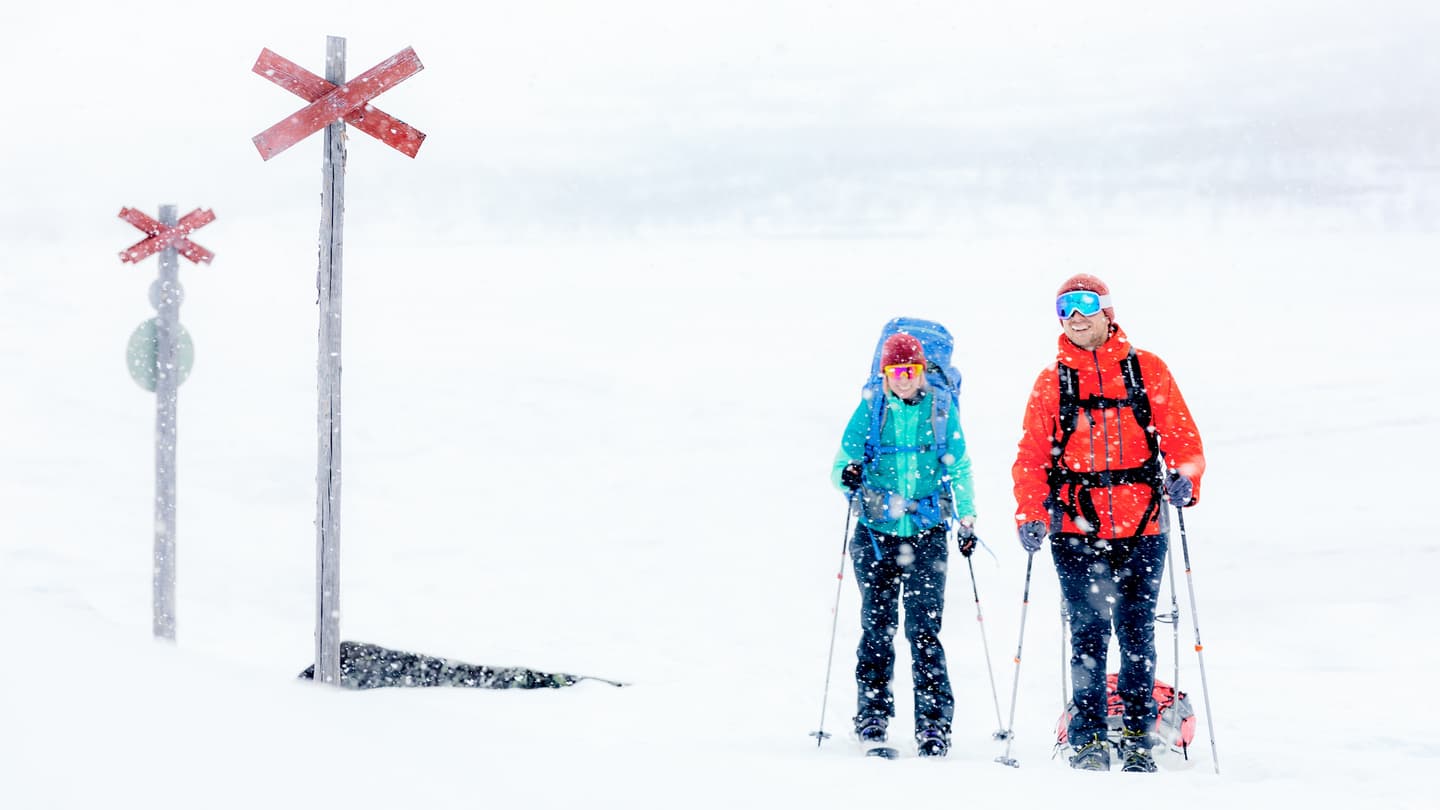
Where do these challenges stand out most?
Urho Kekkonen National Park, Lemmenjoki National Park, the Inari Hiking Area and the wilderness reserves of Lapland.
Urho Kekkonen National Park, for example, is one of Lapland’s most iconic destinations: a vast wilderness area with both maintained winter routes and extensive areas of off-trail wilderness. At the same time, it is rich in waterways, with numerous rivers and streams throughout the park.
This means that safety depends primarily on understanding conditions, rather than simply following a map or relying on physical strength.
1. The most common misconception: “You can always travel on snow”
During a Finnish winter, snow may occur in several forms:
- Soft, loose snow (from early winter until March), which offers little support and makes travel strenuous.
- Wind-packed snow, which is supportive only in certain places, such as open fells, mires and lake surfaces. It typically develops from midwinter onwards.
- Slush and waterlogged snow, especially in late spring, when progress may come to a complete halt.
- Icy and slippery snow following alternating periods of rain and frost, a common spring phenomenon.
- Supportive spring snow, which can become soft and sinking by the afternoon due to sunshine or fresh snowfall.
The same terrain can change completely overnight as weather conditions change. Snowfall or a shift in temperature can transform a route dramatically. As a result, a route that looks easy on a map may be far more demanding in reality.
2. Winter daily distances: why 20 km is often unrealistic
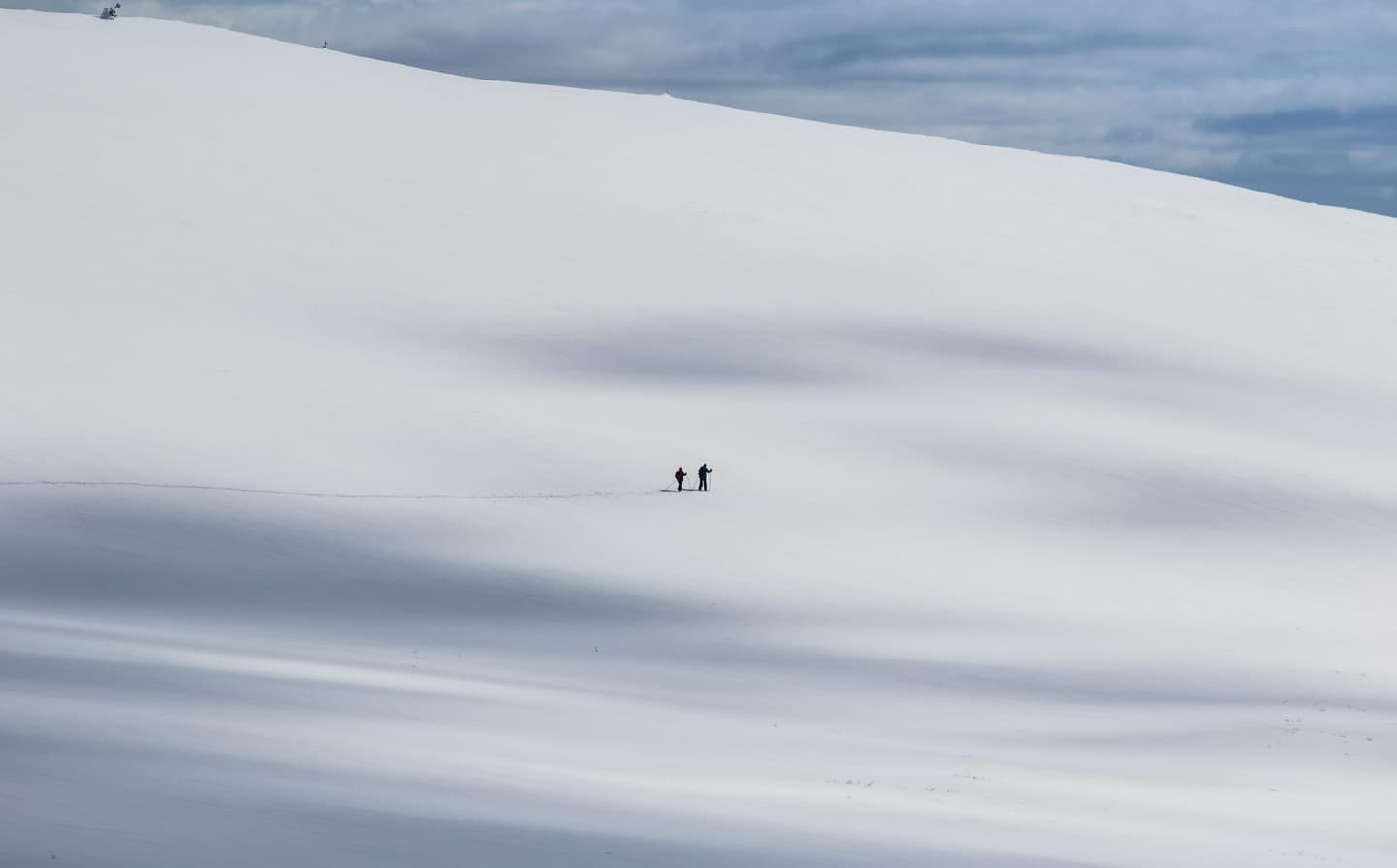
When winter hiking, daily distances should not be planned purely on the basis of map measurements. Snow, visibility, wind and the number of daylight hours determine your pace.
Start with these basics:
- Starting with day trips.
- Learning how your body and equipment perform in snow and cold conditions.
- Increasing trip distances only as your experience grows.
A good winter plan always includes a Plan A and a Plan B. If snow becomes too deep or weather conditions deteriorate, shortening the day’s route or turning back is a sensible decision, not a failure.
3. Equipment choice: why snowshoes are not always the best solution
Snowshoes: easy to start with, but not suitable for everything
Snowshoes work well for:
- Short day hikes.
- Marked winter routes.
- Open fell areas and more supportive snow conditions.
However:
- They are tiring in deep forest snow.
- Long forest crossings can be slow and physically demanding.
- They are not the best choice in every situation.
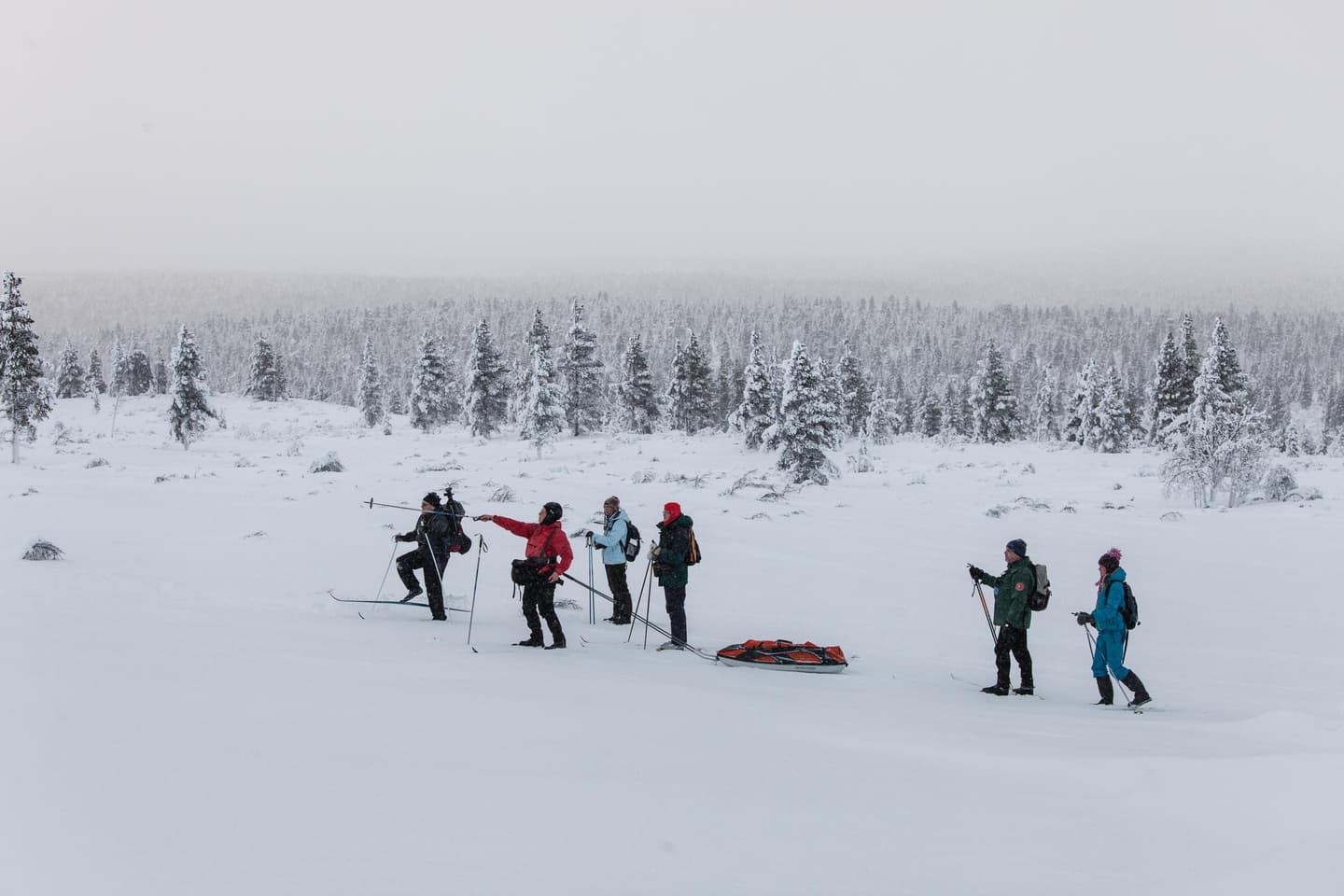
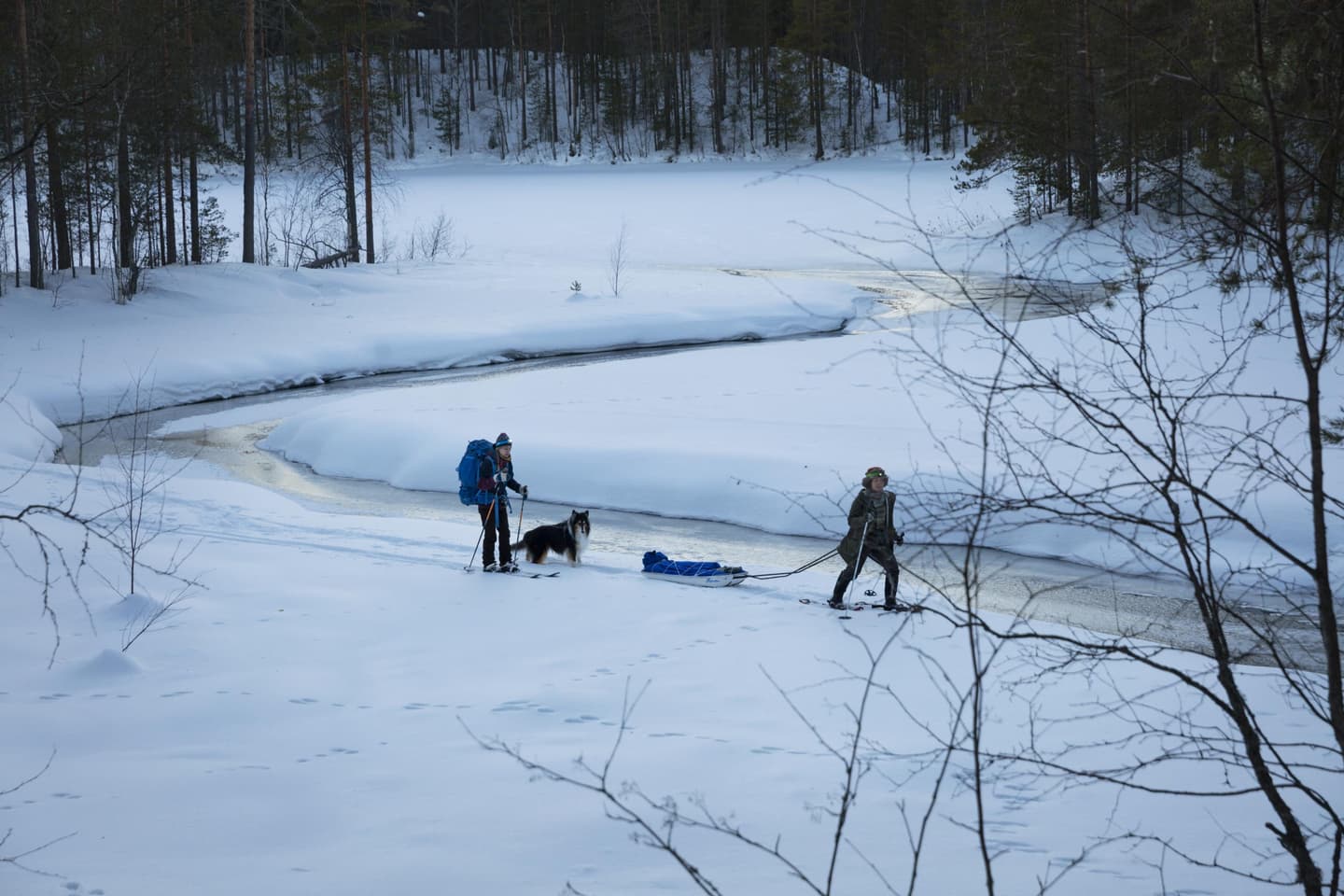
Forest skis and a pulk: a traditional and often more effective combination
On longer winter journeys:
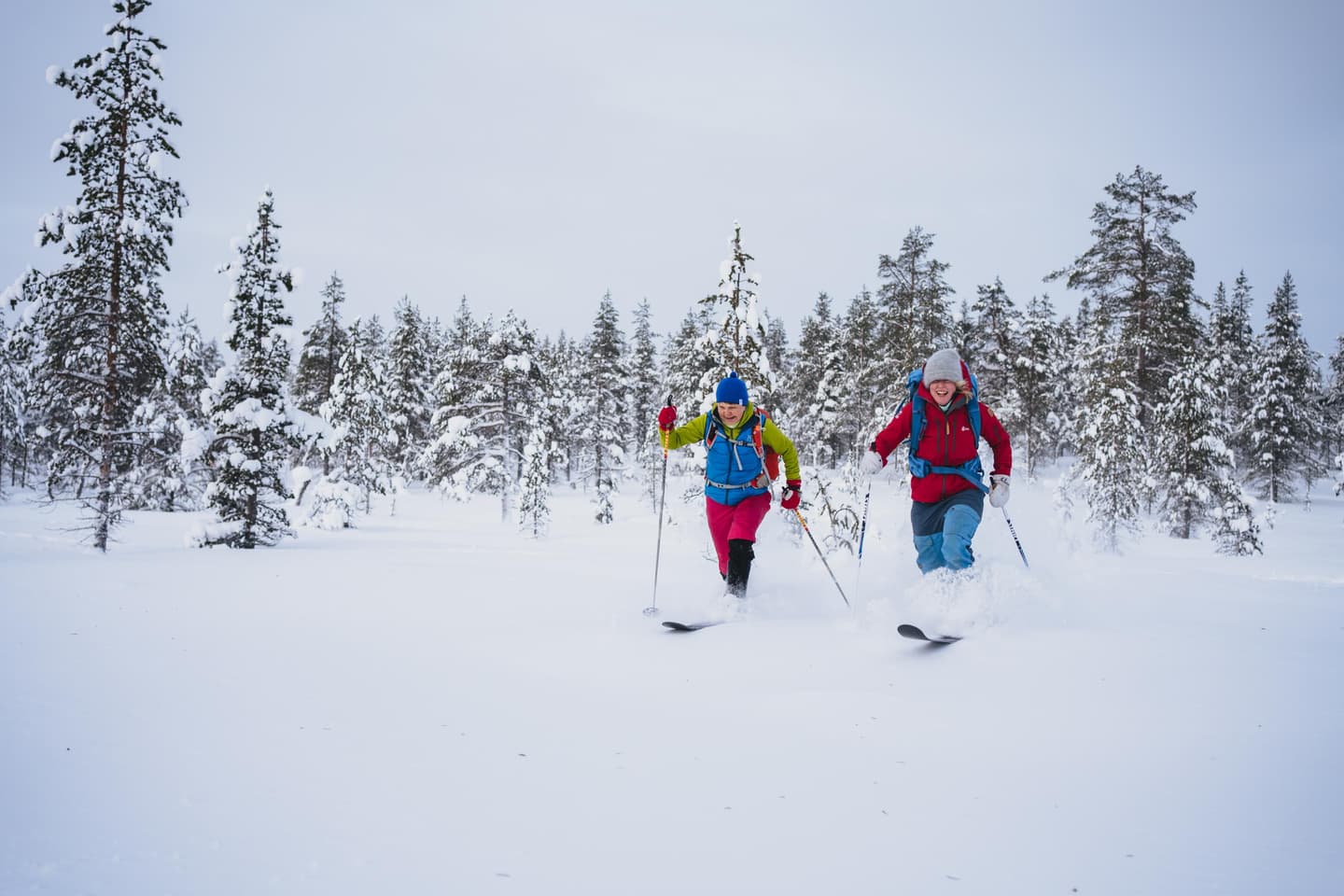
- Forest skis provide better flotation.
- A pulk reduces the weight carried on your back.
- Travel is often faster and more efficient.
In terrain such as Urho Kekkonen National Park, forest skis are often the best option during midwinter, particularly on longer routes. However, it is a good idea to bring snowshoes on the pulk in case conditions vary or change during your trip.
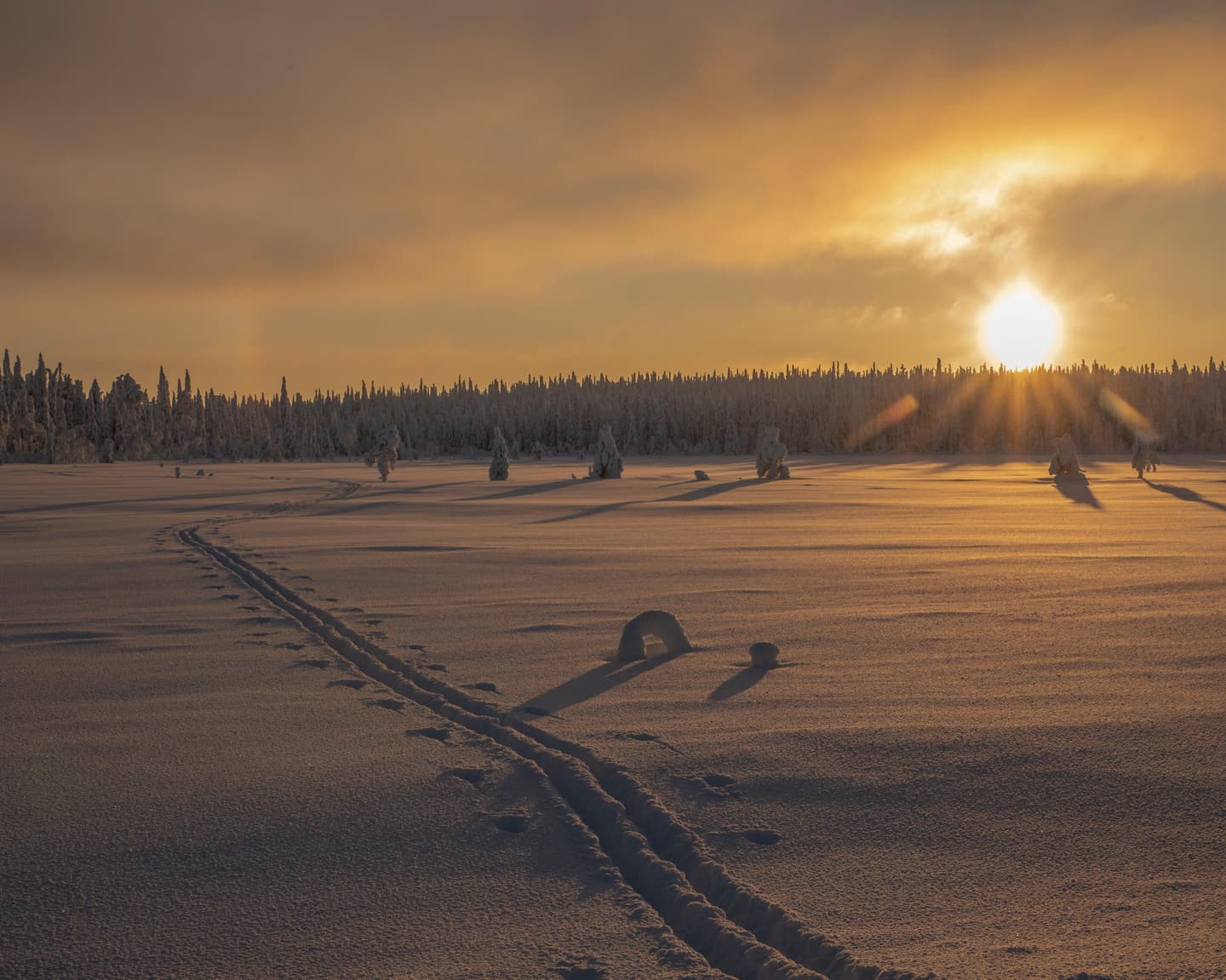
4. Waterways in winter: an invisible but real risk
The most dangerous places in winter include:
- Flowing rivers and streams.
- Narrow lake passages.
- Areas of open water, springs and river mouths.
- Water lying on top of ice.
A lack of snow cover and above-freezing temperatures accelerate the melting of ice. In places where water flows beneath the ice, the ice can thin rapidly from below even when it still appears solid on the surface.
Safety advice
- Avoid crossing waterways during winter trips whenever possible.
- Never travel on ice alone.
- Do not venture onto ice that is less than 10 cm thick.
- Learn how to stay safe on ice before your trip.
5. When is the best time for winter hiking in Lapland?
For many first-time visitors, late winter (March to April) is the best season because:
- Snow is often more supportive.
- Daylight hours are longer.
- The sun provides warmth during the day.
However:
- Early winter often brings loose, sinking snow and weak ice.
- Mild periods may create wet, sinking snow conditions.
- Spring thaw can produce waterlogged snow that may make further travel impossible.
Practical checklist for visitors
Before your trip
- Always check the weather, snow conditions, ice conditions and daylight hours.
- Choose maintained winter routes for your first winter trips.
- Prepare an alternative plan, including a shorter route and a backup destination.
- Carry a paper map and compass, and learn how to use them beforehand.
- Consider joining a guided winter hike.
In the field
- If the snow becomes softer, reduce your planned distance early.
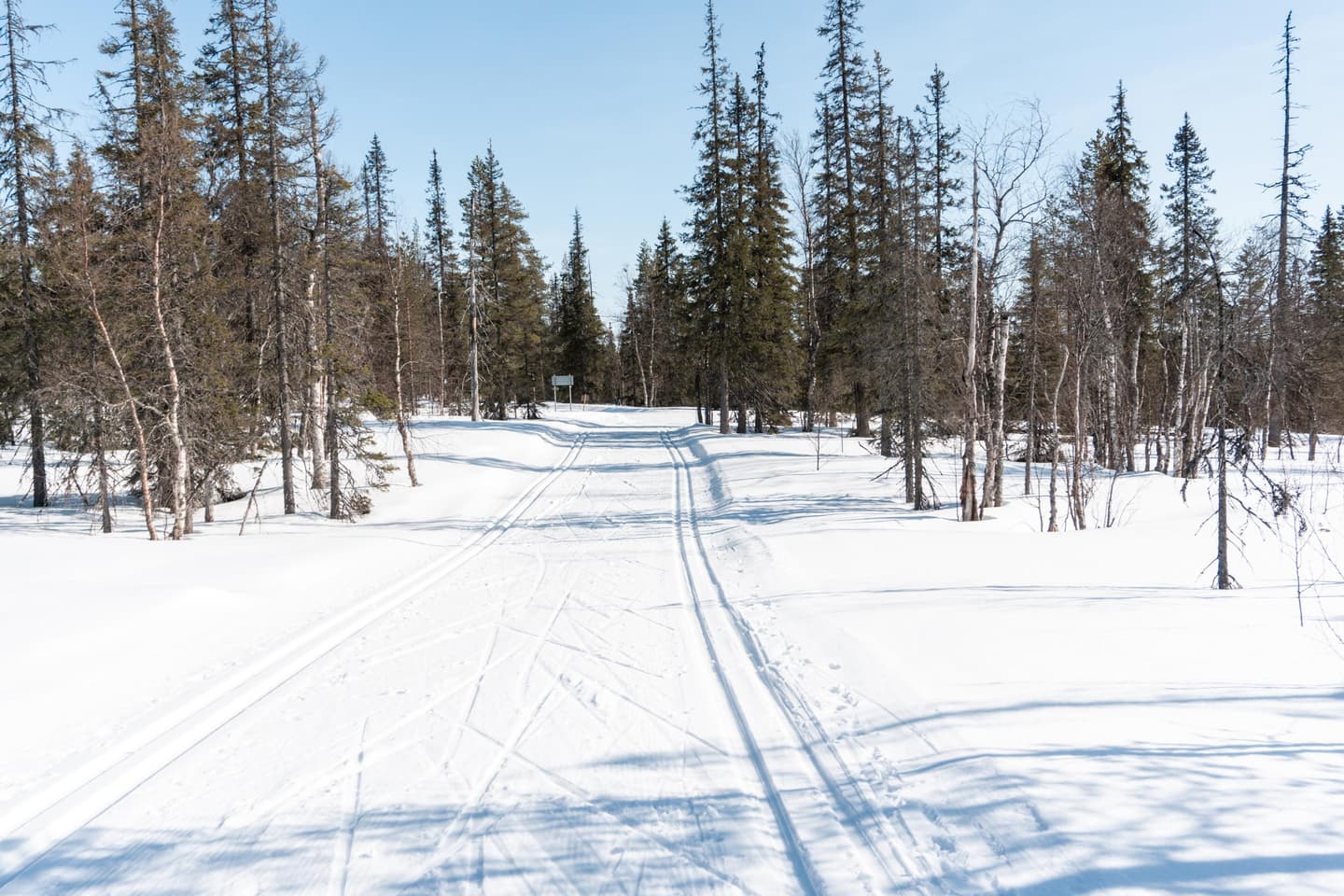
- Do not walk on ski tracks. They are intended for skiers only.
- Exercise extra caution near lakes, rivers and streams.
Where can you find up-to-date information?
Every destination page on Luontoon.fi includes a What’s new section.
This is the most important page to check before any winter trip.
Always review:
- Weather forecasts and temperature changes.
- Notices and warnings.
- The status of bridges, huts and routes.