Overnight stays in nature destination parking area – do you know the ground rules?
Can you spend the night in a motorhome or a camper van at a nature destination parking area? In most cases, yes, if it involves a short overnight stay inside the vehicle. Camping, however, requires permission or a designated area intended for camping and recreational vehicles. By following these guidelines, you can avoid the most common misunderstandings and show consideration for other visitors enjoying nature.
Motorhomes and camper vans are more popular than ever.
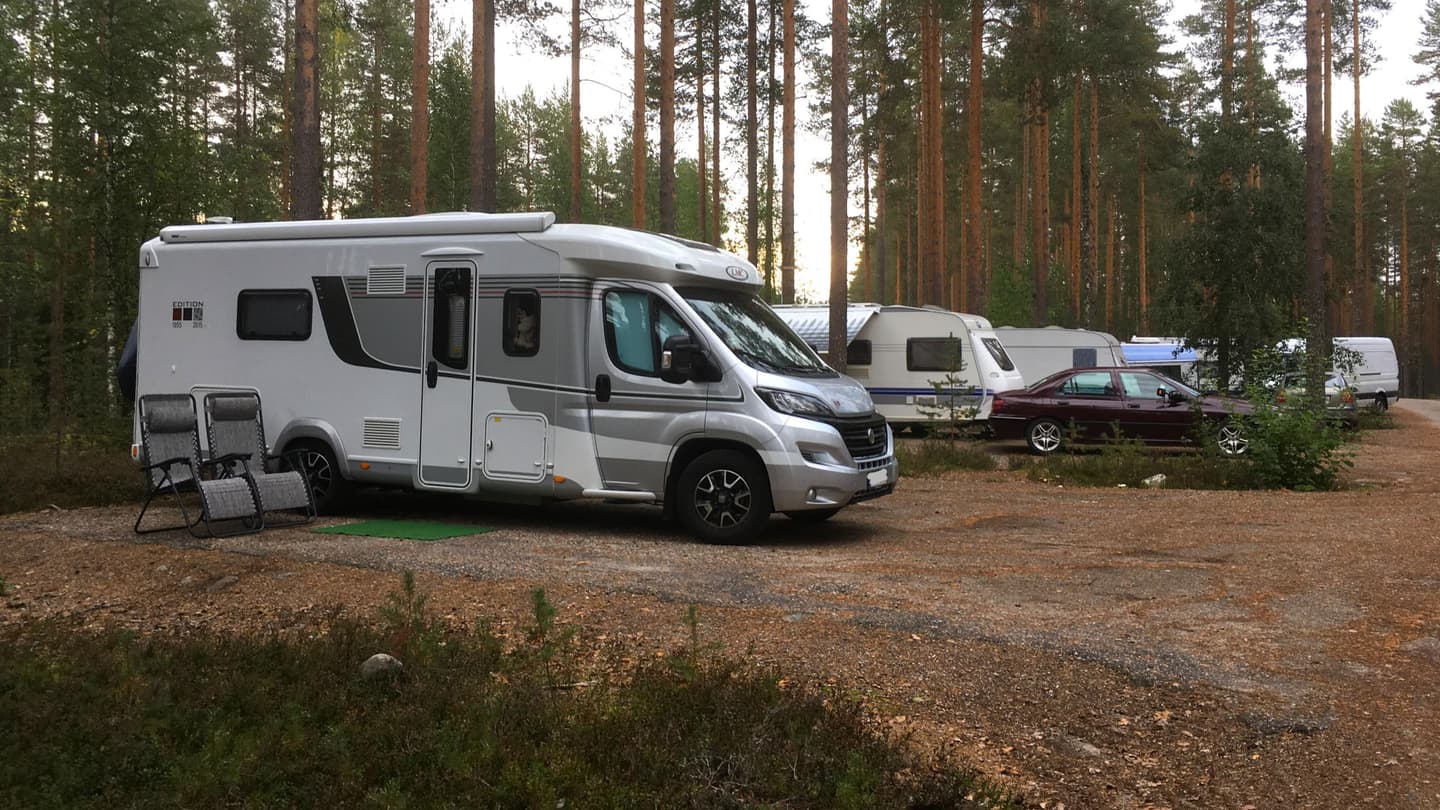
Motorhomes, caravans and all kinds of camper vans are becoming increasingly popular in Finland. According to the Caravanning Industry Association (CIVD), Finland has for several years had the highest number of motorhomes per capita in Europe, and the number continued to grow in 2023. Alongside purpose-built recreational vehicles, many travellers hit the road in camper vans converted from ordinary vans. At its simplest, a camper vehicle can be an estate car with the rear seats folded down into a bed. With a roof tent, even a small car can be transformed into a camping vehicle in no time.
Freedom on the road is part of the appeal
Travelling in a vehicle equipped for camping offers tremendous flexibility. You are free to choose your route and daily schedule, and your home travels with you wherever you go. It is easy to reach remote destinations and set off on day trips straight from your base. No wonder the freedom that comes with this way of travelling is so appealing.
Camping vehicles come in many forms, and travellers' service needs vary accordingly. At many of Metsähallitus’ nature destinations, visitors can find a toilet near the parking area and sometimes also a campfire site. Even these basic services can make life on the road more comfortable, which helps explain why parking areas are often attractive places to spend the night.
But is overnight parking actually allowed?
Overnight parking - know the rules
According to the Finnish Automobile Association, spending the night in a vehicle is often permitted if the stay is temporary and the vehicle is parked in an allowed location. An overnight stay means parking from evening until morning and sleeping inside the vehicle with the doors closed, without activities extending outside the vehicle. Setting up camp around the vehicle, however, is not permitted. An overnight visitor can be seen as a traveller passing through who needs rest, or as a hiker arriving late and preparing to begin their excursion the following day.
Parking is regulated by road traffic and off-road traffic legislation, and protected areas also have site-specific rules. If overnight stays are not allowed in a particular parking area, the restriction is stated either on the destination’s information page on Luontoon.fi or on signs at the site.
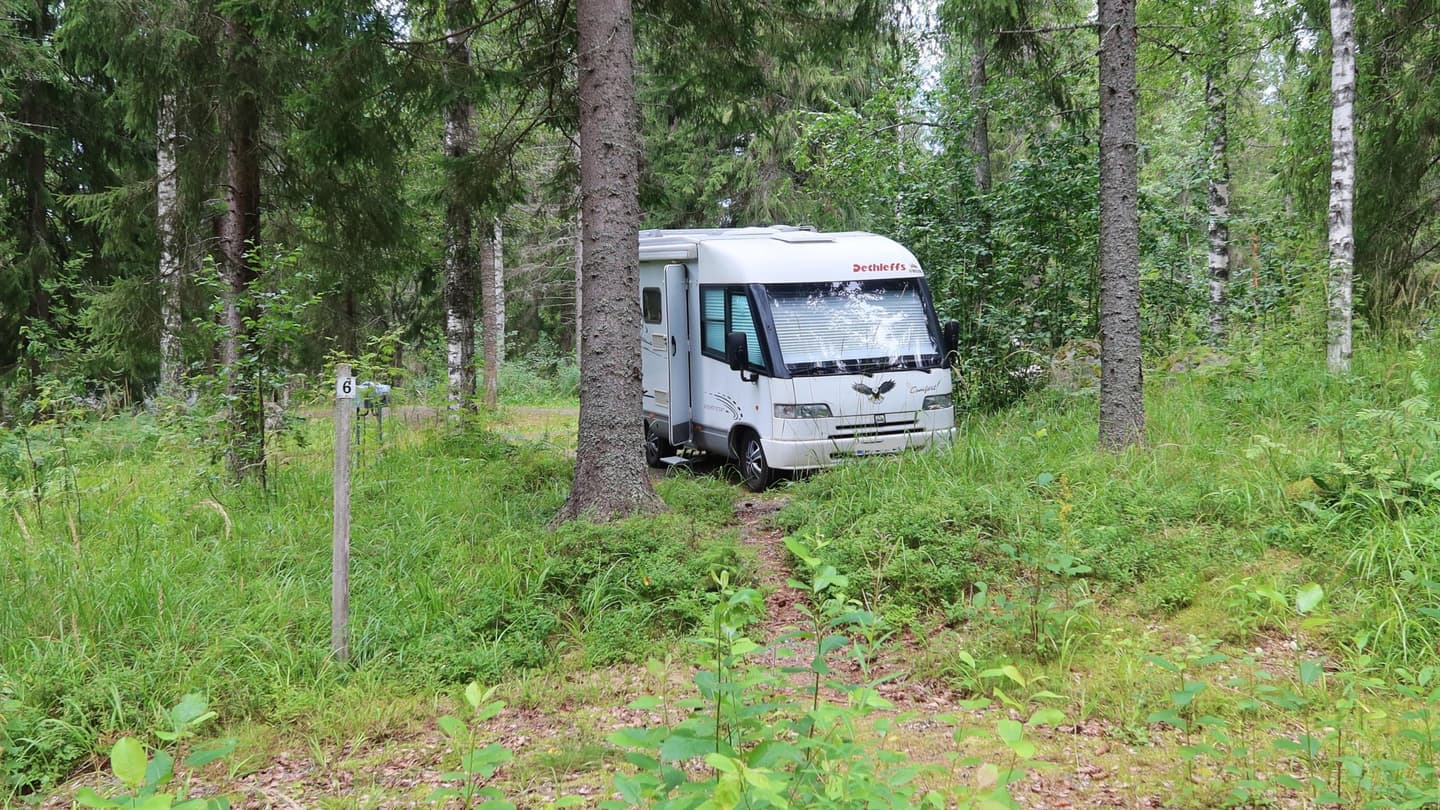
When staying overnight in a parking area, you may not drive your vehicle outside the designated parking area in search of a more spacious or secluded spot, a practice sometimes referred to as “wild parking”.
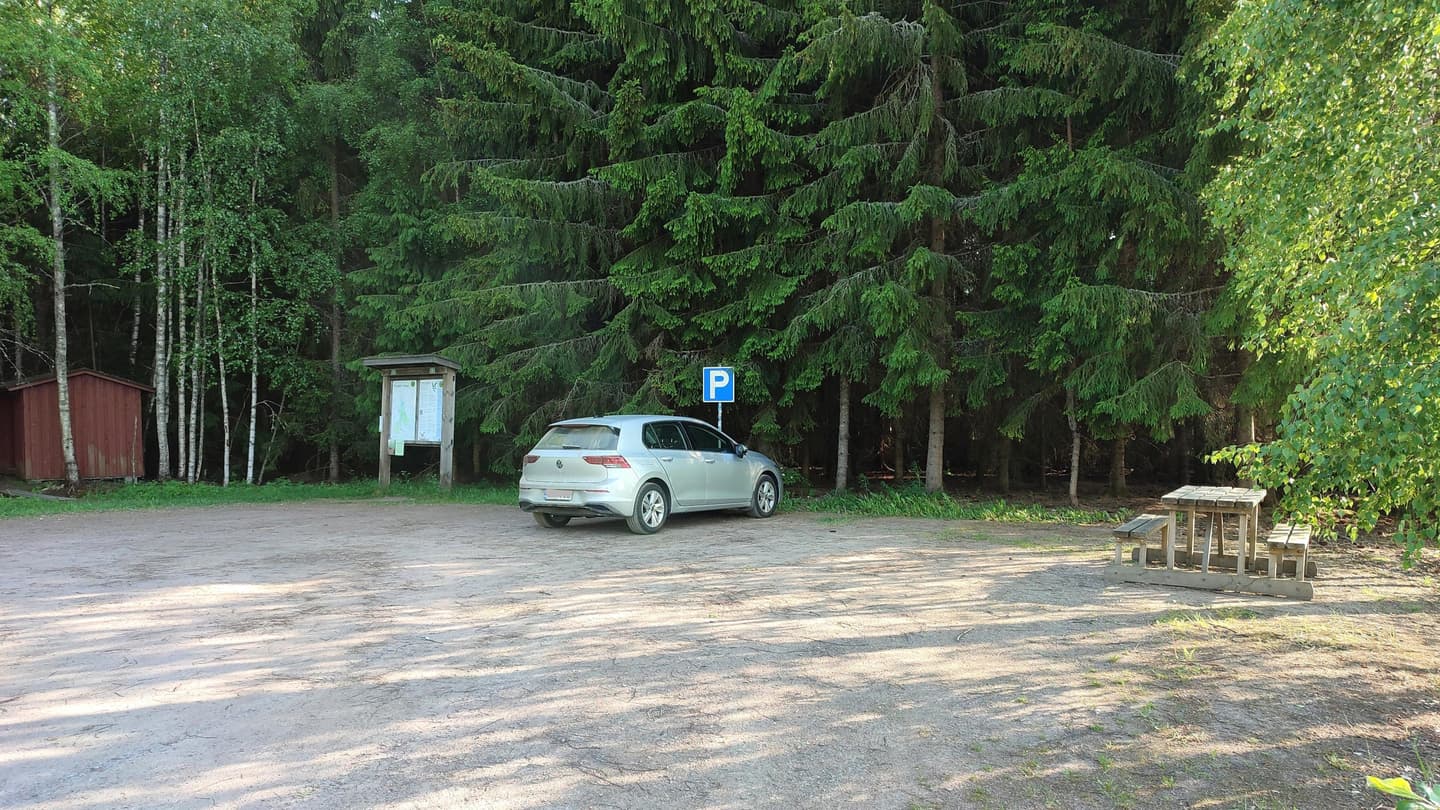
Many parking areas in protected areas are relatively small. Drivers should consider whether their vehicle fits comfortably and whether there will still be room for other visitors. For larger motorhomes, we recommend using campsites or spacious parking areas whenever possible, so that everyone can enjoy the area safely and with respect for nature.
Roof tents are a special case
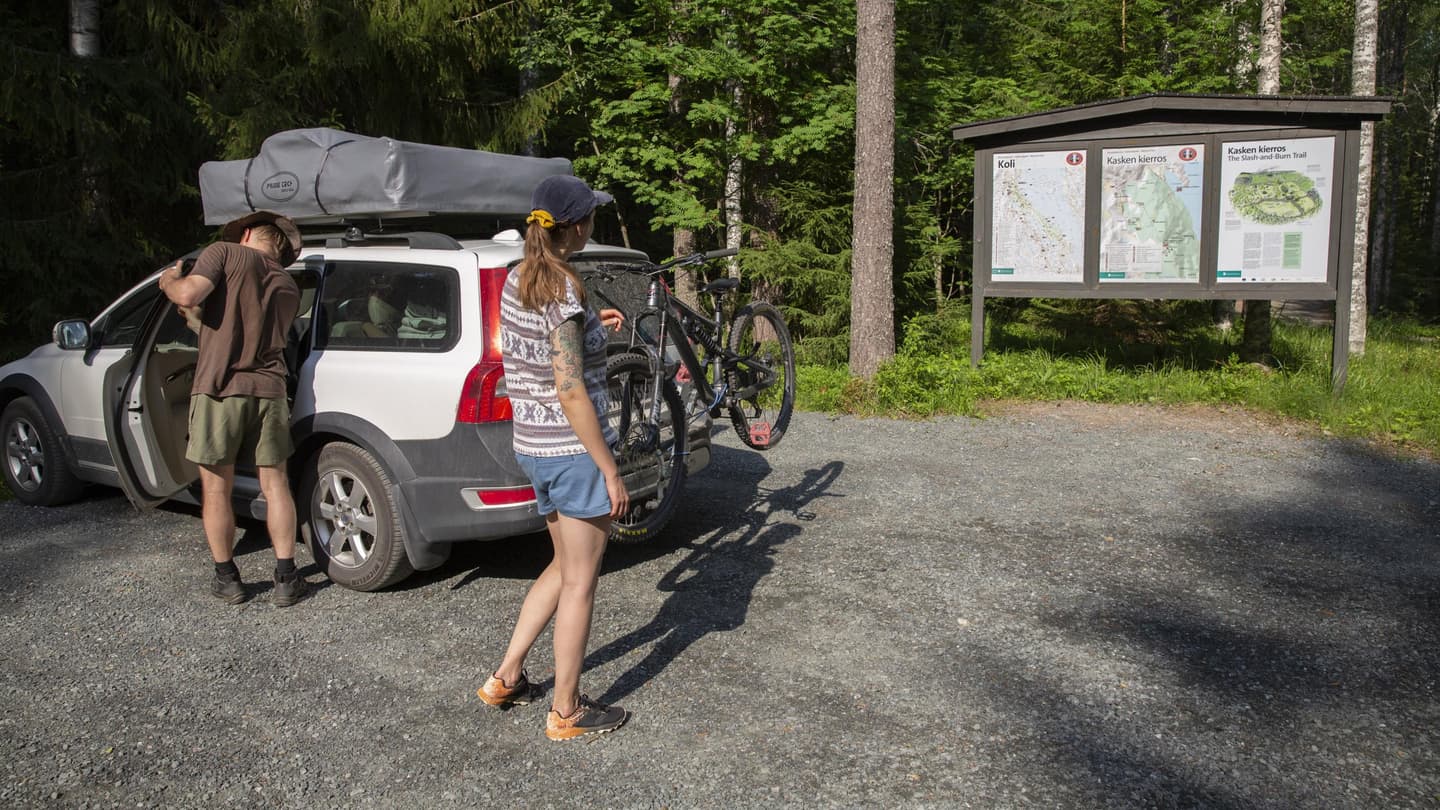
Roof tents permanently mounted on passenger cars have become increasingly popular in recent years. They vary greatly in size, from compact models that match the dimensions of the vehicle to larger versions that extend significantly beyond it.
As a general rule, overnight stays should not involve activities that extend outside the vehicle. However, temporary use of a roof tent in a parking area is permitted, as it is considered comparable to staying overnight in a motorhome or camper van. Apart from the roof tent itself and the access ladder, no additional structures may be set up around the vehicle.
Paid parking
In autumn 2026, Metsähallitus launched a trial of paid parking at a small number of destinations. One question that has arisen concerns how a car and caravan combination is treated in relation to parking fees.
If a trailer, caravan or similar unit is parked separately from the towing vehicle, or occupies an adjacent parking space as a separate unit, both must have their own parking fee payment (or another valid right to free parking, such as a disabled parking permit).
When the towing vehicle and the trailer, caravan or similar unit remain connected and form a single vehicle combination, one parking fee linked to the towing vehicle's registration number is sufficient.
Freedom comes with responsibility
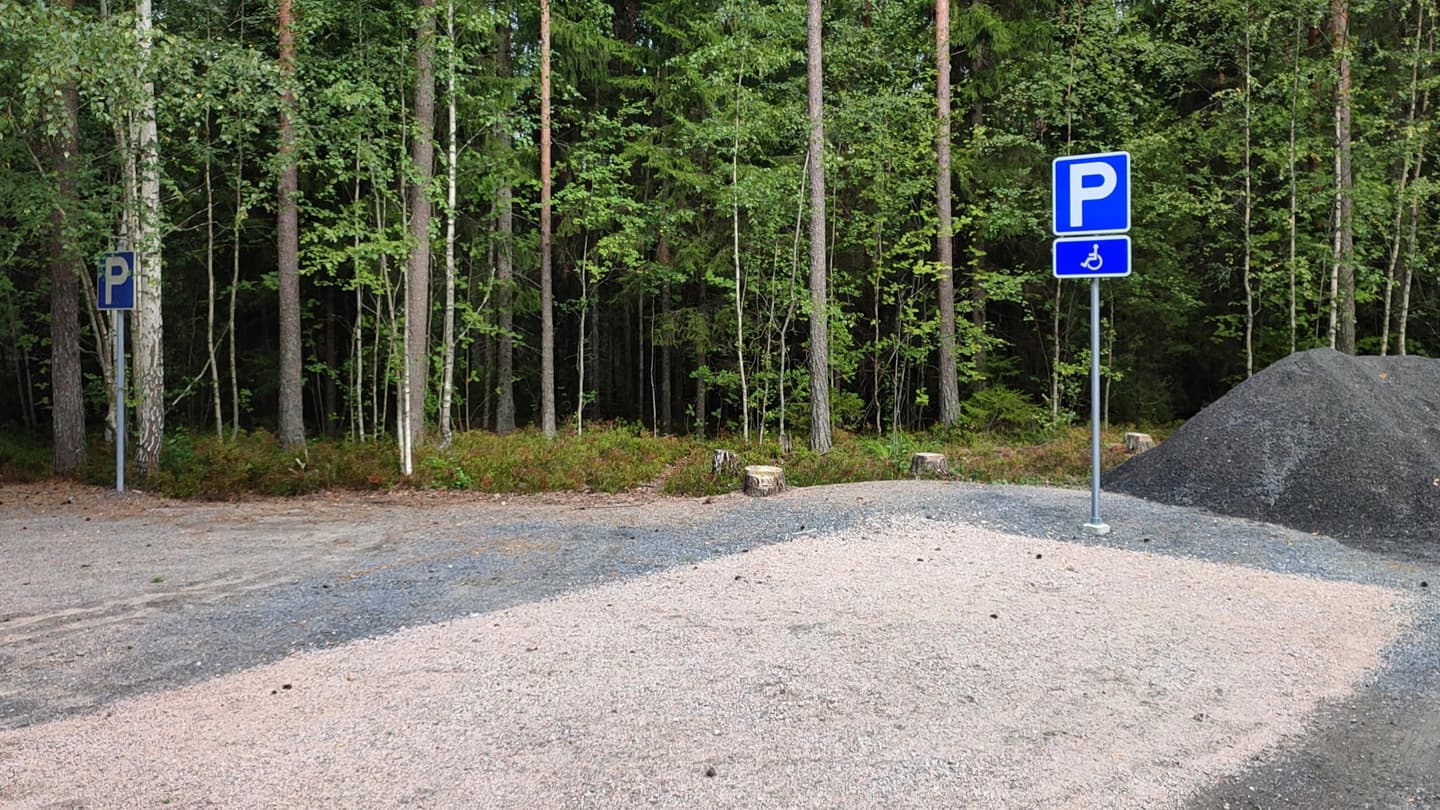
At Metsähallitus nature destinations, parking areas are not always very large. Depending on the season and the destination, they may be either crowded or nearly empty. Always make sure that you use only the space required for your vehicle or vehicle combination, and that your parking does not block emergency access routes, maintenance traffic or accessible parking spaces.
When spending the night in your vehicle in a parking area, please be considerate of other visitors and follow both the site's rules and general outdoor etiquette.
- Do not spread your belongings around your vehicle, as this constitutes setting up camp.
- Follow the outdoor etiquette guidelines.
- Respect nature by keeping noise to a minimum and allowing everyone to enjoy the peace and quiet.
- Be considerate of fellow visitors.
- Take all your waste with you and dispose of it appropriately.
- Never empty chemical toilet waste or wastewater from recreational vehicles into toilets at nature destinations or directly into the environment.