


From the inner archipelago to the outer archipelago
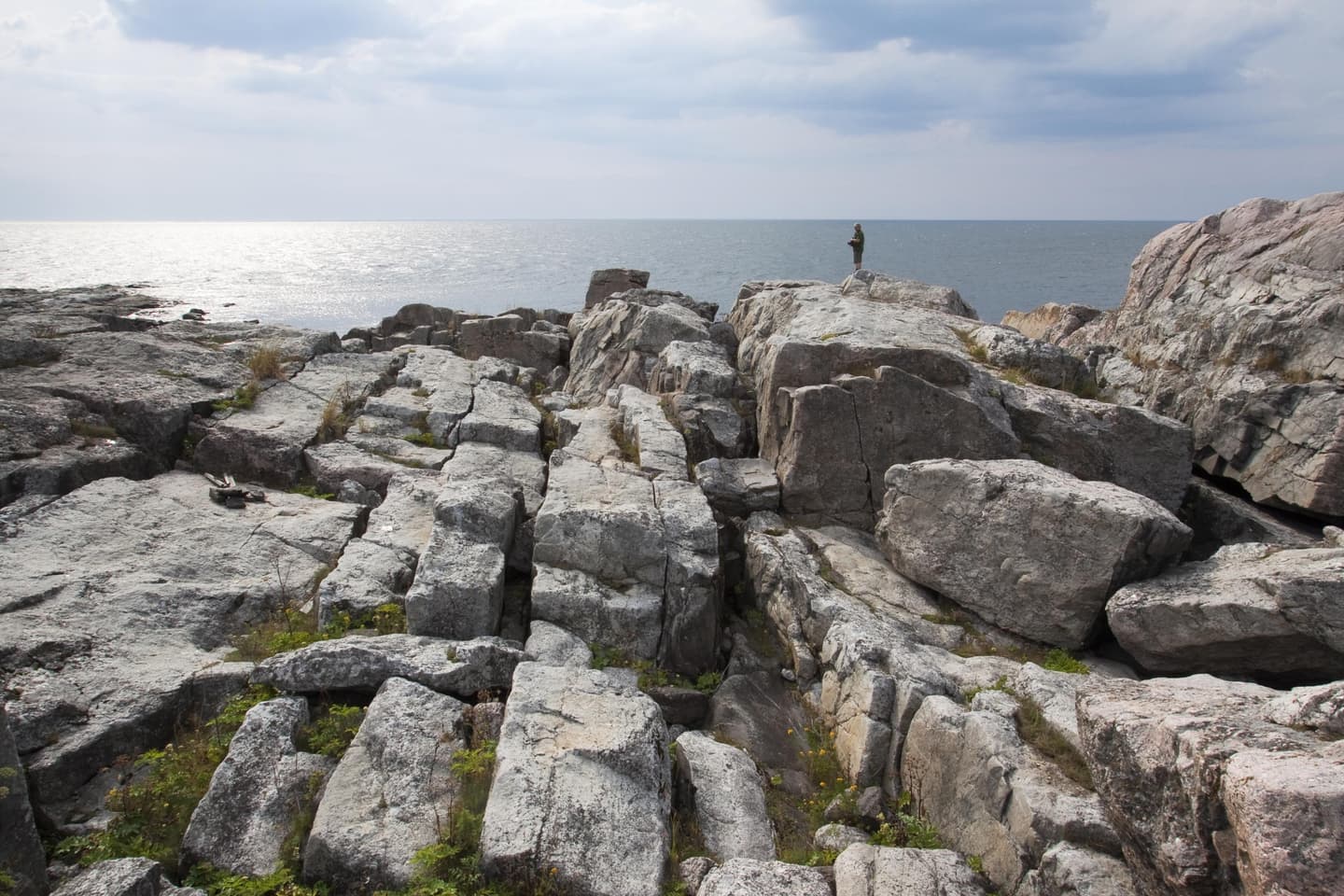
The national park has as many as six archipelago areas that differ from each other in terms of their physical geography. The farther out to the open sea, the more barren nature becomes. The national park mainly consists of a chain of rugged islets and islands in the outer archipelago, stretching narrowly and lengthily from Merikarvia to Kustavi. Hidden in the outer archipelago are rocky bird islets, blooming rocky shores, old archipelago bases with traditional landscapes, and slowly developing forests with coastal pines. The islands are generally quite small, and the waters surrounding the archipelago are shallow.
The Oura Archipelago
The magnificent Oura Archipelago is both biologically and landscape-wise of exceptional importance. The roundish cluster of islands by the open sea consists of hundreds of islands, islets and rocks with few trees or no trees at all. The rock types of the archipelago's bedrock consist of mica schist and diorite. The area is covered by a very rocky strata of glacial till, which is why the archipelago consists almost entirely of boulders, but the area also has rocky islands and pebbly and heath-like islets.
There is forest growing on the area's largest islands and the vegetation of the smallest ones has been affected by grazing which took place before. The depressions of the large islands also have patches of mire. The Oura Islands are an excellent example of coastal uplift with their outer islands and bays rising out of the sea.
The area's nature is beginning to resemble the Kvarken Archipelago further north in many ways. Among the sea buckthorn dominating the shores there are marine species, such as seaside arrowgrass (Trigloching maritima) and sea campion (Silene uniflora). The Bothnian Sea specialty, seaside crowfoot (Ranunculus cymbalaria), also grows on the Oura Islands, as does the Scots lovage (Ligusticum scoticum). In places under the water surface, spiny naiad (Najas marina), sago pondweed (Potamogeton pectinatus) and widgeon grass (Ruppia maritima) form wide canopies.
The bird fauna of the Oura Islands is at its best during the migration period, when such birds as the greylag goose (Anser anser), greater scaup (Aythya marila) and velvet scoter (Melanitta fusca) take a rest by the area's coastal waters. The velvet scoter may even occasionally nest in the area. With good luck, a person on the water may even see a white-tailed eagle (Haliaeetus albicilla).
The archipelago of Gummandoora and Pooskeri
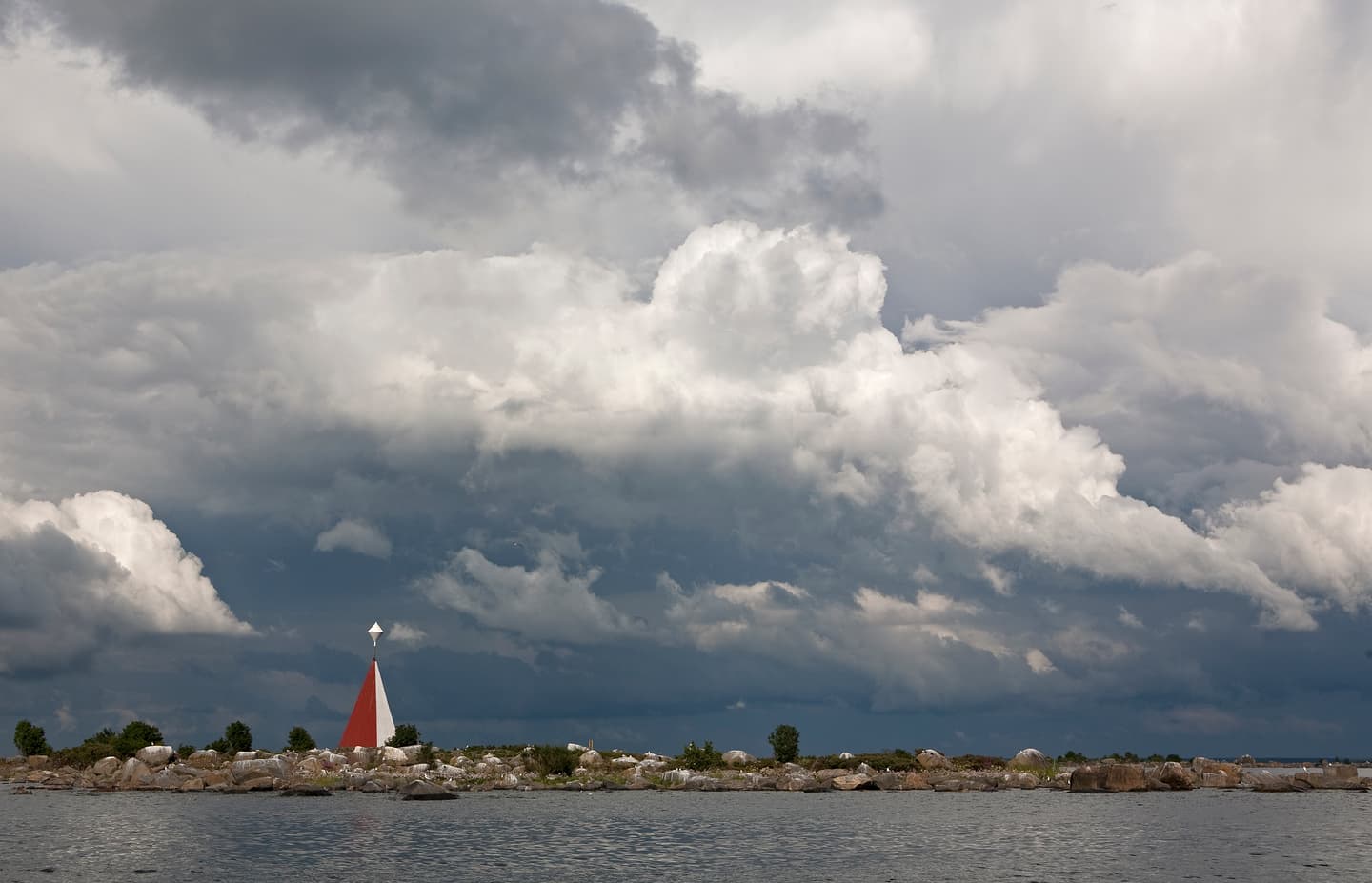
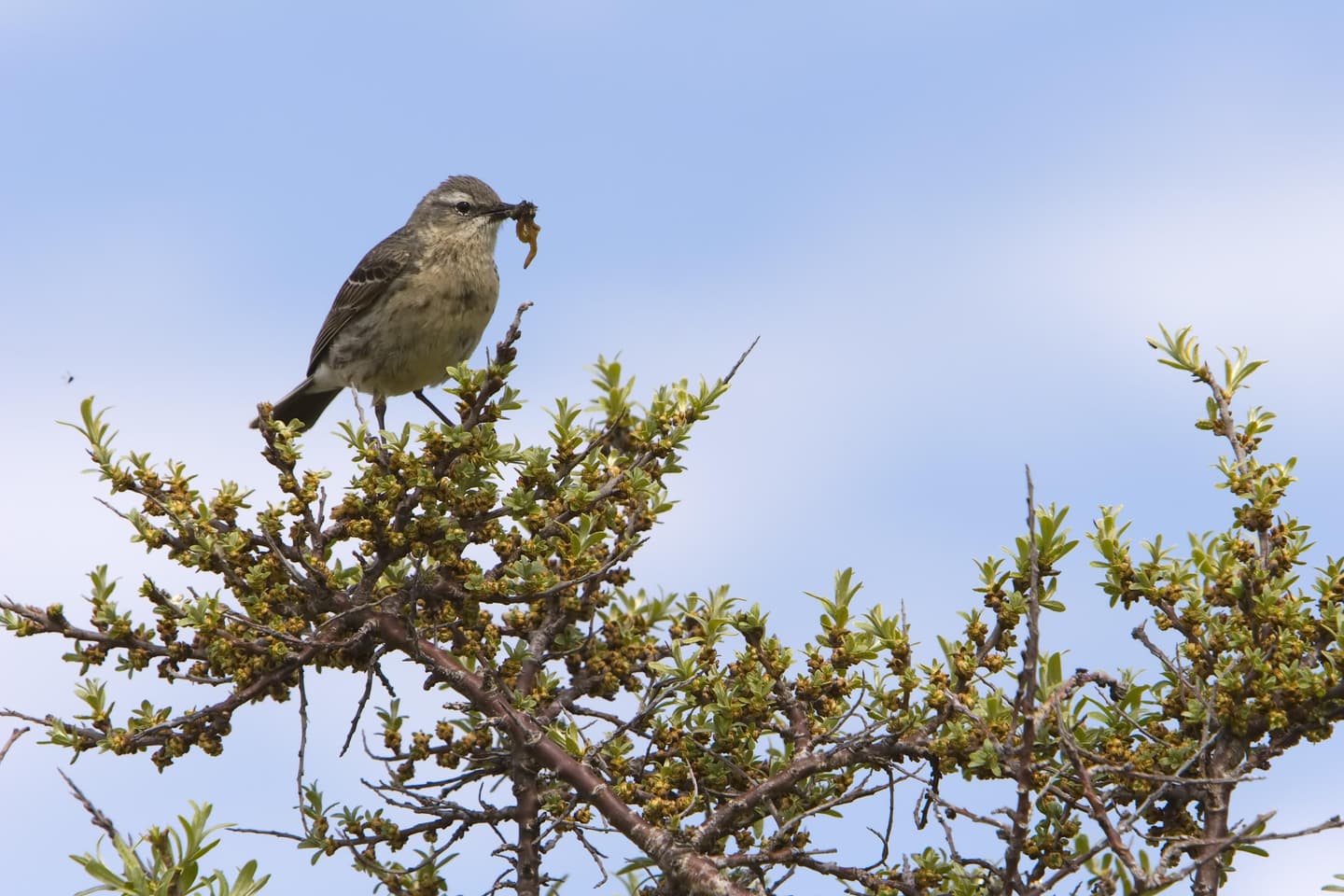
The wide outer archipelago area of Gummandoora, which belongs to the Bothnian Sea National Park, is complemented by River Ahlaistenjoki. Due to its zonality, the area has a very diverse range of species. It also has a rich range of sea birds: visitors can enjoy seeing such birds as the goosander (Mergus merganser), red-breasted merganser (Mergus serrator), common tern (Sterna hirundo), Arctic tern (Sterna paradisaea), Caspian tern (Sterna caspia) and rock pipit (Anthus spinoletta). The common eider (Somateria mollissima), which feeds on common mussels, also nests in the area.
The Gummandoora Archipelago is completely covered by strata of glacial till and sand. The till is rocky, which is why the scenery is dominated by boulder fields both by the shores and in the inner parts of the islands. Seliskeri Island and a part of Iso-Enskeri Island belong in the National Park. They are also some of the area's largest wooded islands.
The smallish delta of the River Ahlaistenjoki is an ecotone of low salinity and fresh water. Vegetation that has adapted to these exceptional conditions reigns in this area, represented, for example, by flat-stalked pondweed (Potamogeton friesii), fineleaf waterdropwort (Oenanthe aquatica) and fan-leaved water crowfoot (Ranunculus circinatus).
Preiviikinlahti Bay
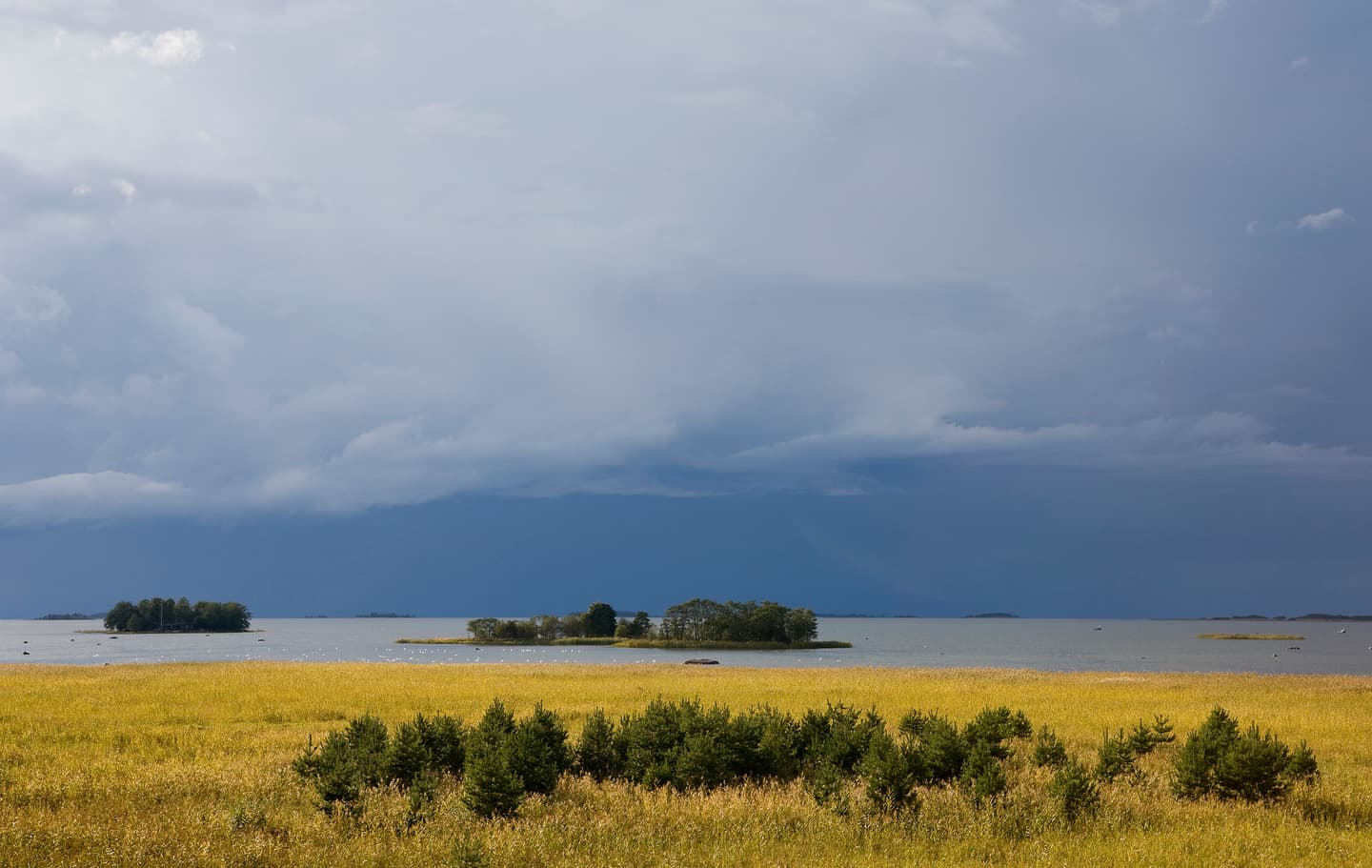
Preiviikinlahti Bay is a wide, fine-sand-bottomed and relatively shallow bay. The coastal meadows of the beaches are created by pasture land and new land exposed by the water. Beaches are easily reed as a result of eutrophication. In terms of their flora, the islands of the bay are very interesting. The soil consists of sand and stones and many of the islands are characterised by lichen-based heath vegetation, with almost the only wood species being the wind-blown rowan tree. On the low-lying shoreline meadows, you can spot, for example, the seaside centaury (Centaurium littorale), branched centaury (Centaurium pulchellum), fairy flax (Linum catharticum) and knotted pearlwort (Sagina nodosa). The islands are also a home to the Gulf of Bothnia specialty, Deschampsia bottnica. On the shores, in the potent soil of the accumulated banks of bladderwrack, grow, for example, the beautiful yellow woad (Isatis tinctoria).
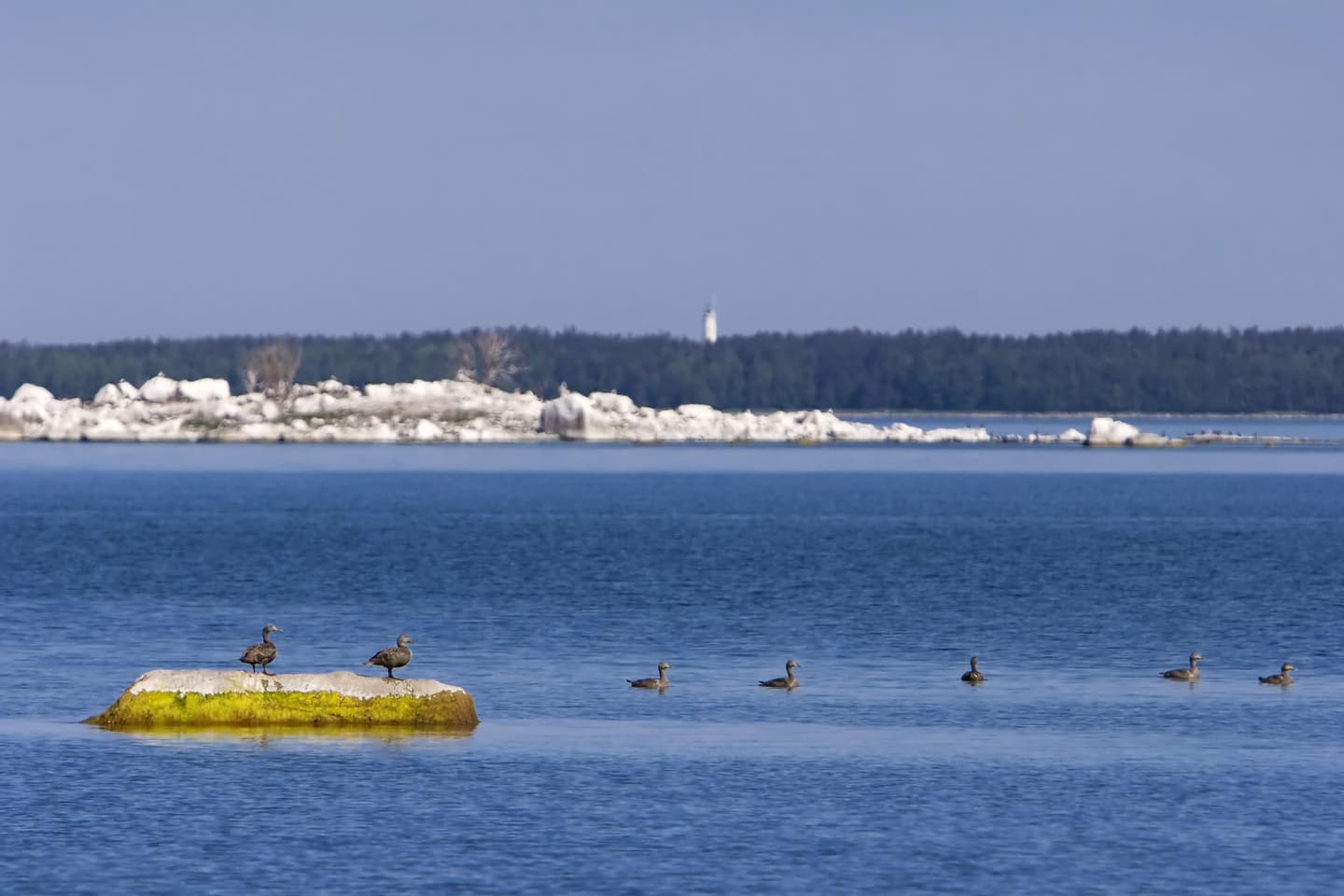
In terms of bird fauna, the Preiviikinlahti Bay is internationally significant. The numbers of species and couples of nesting water birds are great. Water birds are represented, for example, by the common shelduck (Tadorna tadorna), garganey (Anas querquedula), northern pintail (Anas acuta), greater scaup (Aythya marila) and common coot (Fulica atra). The most common bird on the islands is the common eider (Somateria mollissima). The oystercatcher (Haematopus ostralegus), common ringed plover (Charadrius hiaticula), ruddy turnstone (Arenaria interpres), common redshank (Tringa totanus) and common sandpiper (Actitis hypoleucos) are some of the wader species nesting on the islands. The highly threatened Baltic dunlin (Calidris alpina schinzii) also nests in the area.
The area called Yyterin lietteet on the northern shore of the bay is the most important resting place for waders in Southern Finland. The migratory species include, for example, the dunlin (Calidris alpina), little stint (Calidris minuta), curlew (Calidris ferruginea), red knot (Calidris canutus), sanderling (Calidris alba), broad-billed sandpiper (Limicola falcinellus), grey plover (Pluvialis squatarola), bar-tailed godwit (Limosa lapponica) and red-necked phalarope (Phalaropus lobatus). In addition to waders, migrating water birds find their way there, and at the end of August, the bay is often filled with thousands of birds. Towards the end of the autumn, hundreds of whooper swans (Cygnus cygnus) take over the bay.
The Luvia Archipelago
The Luvia Archipelago represents the nature in the Satakunta archipelago at its most diverse. The area is situated in the southern part of Satakunta's sandstone area, where the diabase bedrock has an eutropic effect in places. The area's southern part is covered by an uneven stratum of glacial till, which is why the shores and islets are craggy and stony. Glaciated rock becomes more common as you travel north. The wind and ice keep the smallest islands treeless and open. With the progress of the land uplift, the larger islands have gained a wooded cover to protect them.
The birdlife of the Luvia Archipelago is a good representative of the species found by the Bothnian Sea. The white-tailed sea eagle (Haliaeetus albicilla) nests in the area regularly. The greylag goose (Anser anser) population is ample. The Arctic skua (Stercorarius parasiticus), which robs its food from other birds, has also found its place here, as have the common shelduck (Tadorna tadorna) and greater scaup (Aythya marila).
The wooded Säppi Island is the largest island of the area. The diabase bedrock, in part, accounts for the island's diversity. Its southern and eastern shores are low-lying and they clearly show the gradual changing of the species which is due to the land uplift. After the cobble beach, you come to a bank of bladderwrack, piled up by the sea, which offers a rich foundation for diverse vegetation and micro organisms. Depending on the moisture conditions, the next area is either a meadow flanked by a reed bed or a herb-rich forest of black alders. On the eastern shore, after the bank of bladderwrack, there is a fairly wide meadow, whereas on the southern shore a herb-rich forest has been created on the bed of bladderwrack by the seashore and there, in the shadow of black alders (Alnus glutinosa), grow the red campion (Silene dioica), wood millet (Milium effusum), raspberry (Rubus idaeus) and reed canary grass (Phalaris arundinacea). In the northwest part of the island, two esker formations rise out of the sea. The shores have magnificent glaciated rocks.
The dry meadow vegetation surrounding the Säppi Island lighthouse depicts the long-term cultural influence that has been present on the island. In the courtyard area of the lighthouse you can find, for example, lady's bedstraw (Galium verum), meadow foxtail (Alopecurus pratensis), sweet vernal grass (Anthoxanthum odoratum), chives (Allium schoenoprasum), wild strawberry (Fragaria vesca), maiden pink (Dianthus deltoides) and downy oat-grass (Avenula pubescens).
Most of the island belongs within the National Park. The part that does not is a privately-owned protected area.
The archipelago of Rauma and Eurajoki
The narrow outer archipelago situated in front of the town of Rauma has a strong marine air. The outer islets are treeless, or nearly so, and either completely without bushes or they have dense juniper thickets. In places, there are thick sea buckthorn bushes growing by the shore and individual wind-blown rowans (Sorbus aucuparia), birches (Betula sp.) and alders (Alnus sp.).
The outer archipelago is first and foremost an important area for sea birds. The juniper thickets of the islands, dense in places, and the shallow coves of the shores provide shelter for nesting birds. Of water birds, the common eider (Somateria mollissima) is a dominant species. Other water birds include, for example, the greylag goose (Anser anser), common shelduck (Tadorna tadorna), greater scaup (Aythya marila) and Arctic skua (Stercorarius parasiticus). Low rocks, especially Kalla, Susikari and Bokreivit, are valuable in terms of their birds and as nesting areas, and also as resting places for migrating birds. During migration, waders take a rest by the banks of bladderwrack that accrue in the shallows.
After the founding of the National Park, areas of Rauma town were affiliated into it voluntarily. These areas include the Kylmäpihlaja lighthouse and Kuuskajaskari fortress.

The archipelagos of Uusikaupunki and Seksmiilari
The archipelago zones in front of Uusikaupunki and Kustavi are some of the largest in the Bothnian Sea. The archipelago mainly consists of small islands and islets. The most southern parts belong in the Laitila rapakivi area, whereas the northern side has mica schists and diorites. There are also mafic rocks and lime dikes.
Bare glaciated rocks on the shores are common, because the moraine sheet is thin and the sea washes against it. In comparison to the central and northern parts of the National Park, there are few loose sediments here. Under the water surface, there are narrow, deep basins caused by large fracture valleys and these are surrounded by extensive shoal areas. The quality of the water is almost pristine.
The small islands and islets of the outer archipelago offer birds both nesting areas and resting places during migration. Especially the islets of Harmaaletot, Sinneskerit and Santakarit are extremely valuable in terms of their birds. A majestic white-tailed sea eagle (Haliaeetus albicilla) soars above the archipelago. There are a great number of common eider (Somateria mollissima) in the area.
The species that nest here include, among others, the razorbill (Alca torda), which nests in colonies on the edge of the open sea, as well as the Arctic skua (Stercorarius parasiticus) and Caspian tern (Sterna caspia). Here you can also spot the guillemot (Uria aalge), which thrives by the open sea, although its nesting there is extremely rare.
