River crossings in Urho Kekkonen National Park
Urho Kekkonen National Park is predominantly a wilderness area, crossed by numerous larger and smaller rivers. The national park has several river crossing points that require careful planning and preparation for variations in water level. This article emphasises the responsibility and safety of water crossings for hikers.
Fords in the national park
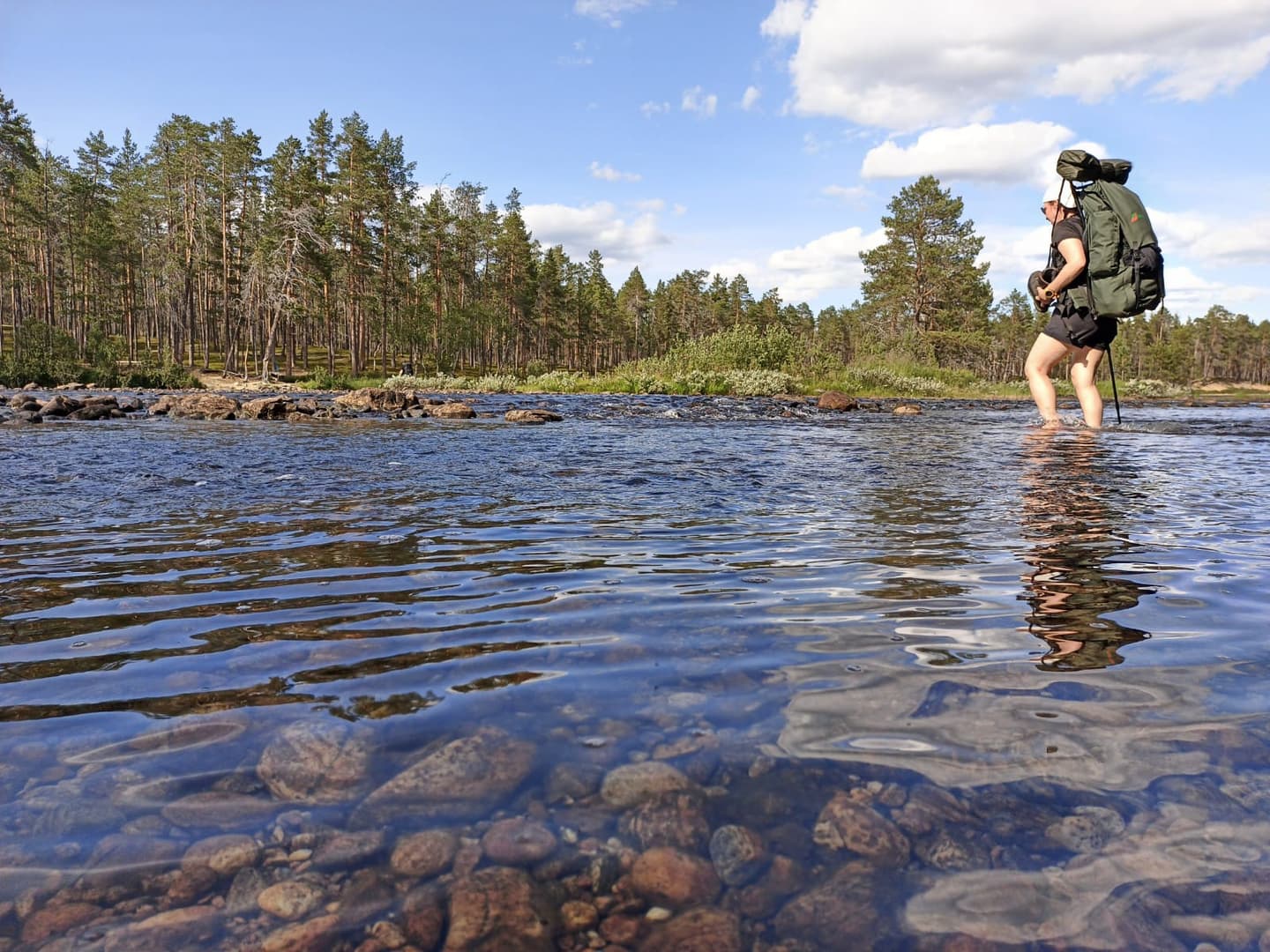
In all river waters of the national park there are shallow crossing points that can be crossed by wading when the water is at a normal level, with the exception of the River Lutto. For a person of average height, the water at the fords reaches on average to the knee. The current varies from ford to ford: the narrower the crossing point is, the stronger the current usually is. Wading in a strong current is always more demanding.
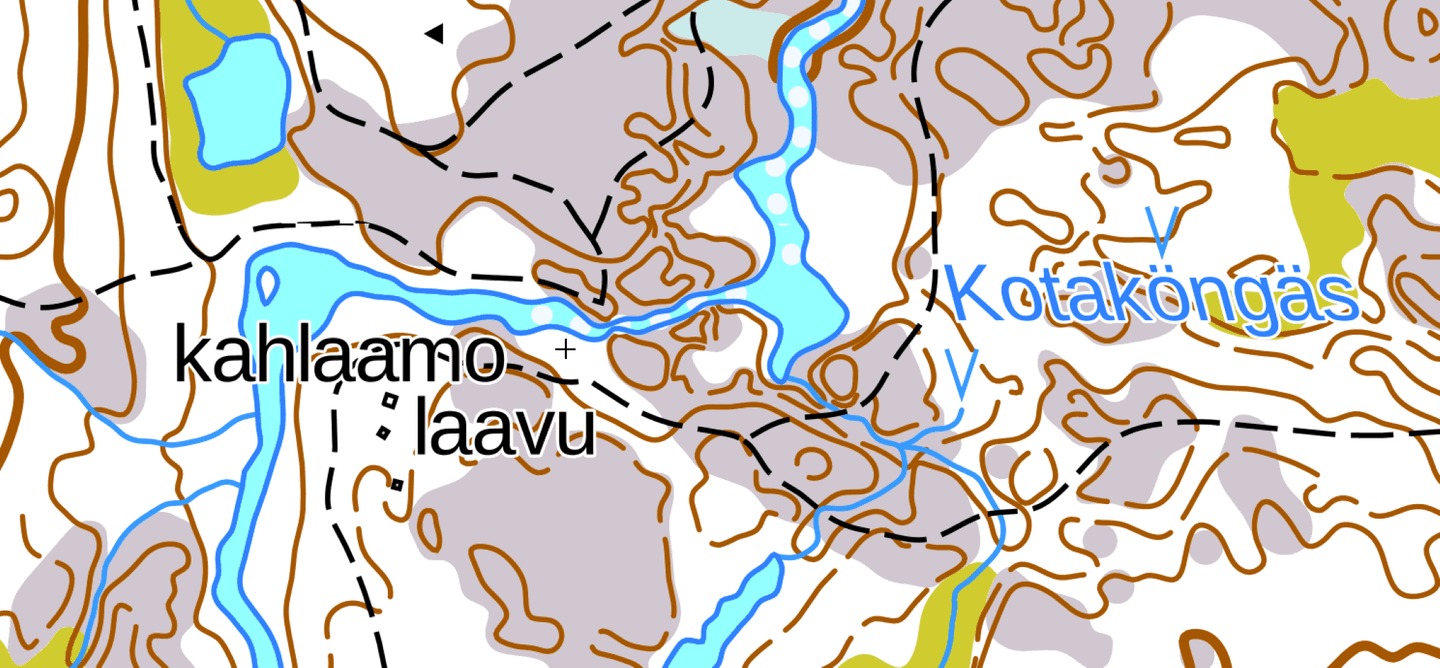
Commonly used fords are marked in the National Land Survey of Finland's map data with the label “kahlaamo”. Fords are also shown on the Luontoon map. Shallow places may also occur elsewhere, but the places marked as fords on the map are the best-known crossing points. Shallow places are often found at rapids and at wide sections of rivers.
The importance of fords has increased following the removal of the Porttikoski and Kotaköngäs bridges in 2026. In the remote zone of the national park, two bridges remain: Luttojoki riippusilta ja Aitaoja silta.
There is one ford marked in the terrain in the national park, at Aittajärvi. On the Suomujoki River, east of Aittajärvi, a ford over 50 metres wide is marked on the riverbed with orange marker stones. See the Aittajärvi kahlaamo on the Luontoon service map.
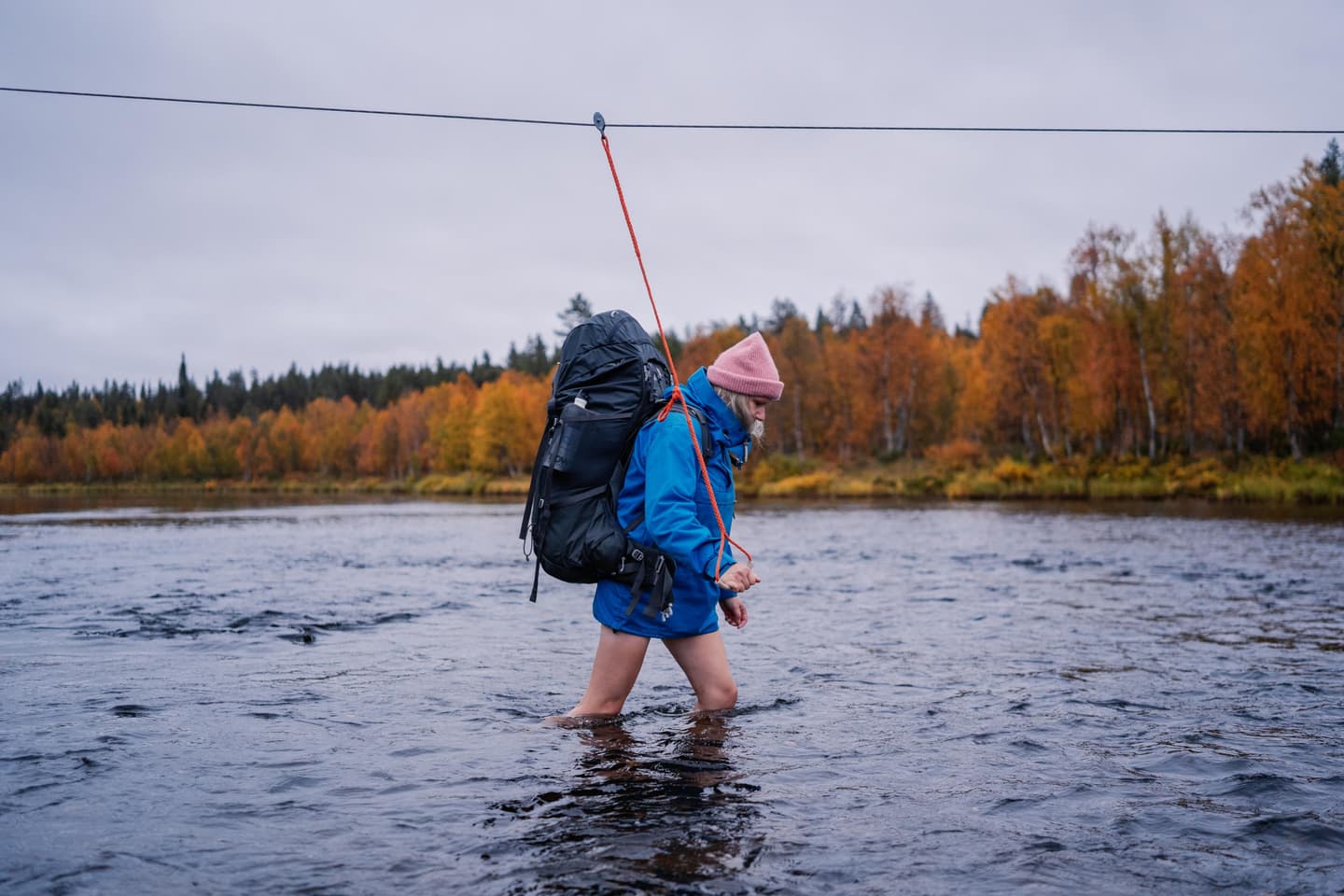
Along the Nuortti hiking trail, there is one ford equipped with a cable: Kärekeoja. The cable is always installed in early summer and removed in late autumn. The installation of the cable is always communicated separately in the current news of the national park.
The impact of conditions on water level
Numerous small streams flow into the rivers of the national park, and their catchment areas are extensive. This means that as a result of heavy or prolonged periods of rain, river waters rise very quickly to flood levels. Rivers that flood particularly quickly include, for example, the River Muorravaarakanjoki and the River Suomujoki. When planning route choices, it is important to take into account possible changes in the water level of rivers. It is also advisable to make an alternative route plan in advance that can be carried out despite flooding. On the threshold of the trip, it is recommended to follow weather forecasts carefully and, if necessary, change the trip to the alternative plan.
In early summer, the water level in running waters is higher than usual as ice and snow melt. Flooding may rise very quickly and to a high level. The amount and development of flooding are influenced by the amount of snow and ice during the previous winter as well as temperatures in late spring. If large amounts of snow and ice melt rapidly at once due to a heatwave, floods usually rise to record levels but also decrease quickly. Cool spring weather, on the other hand, prolongs the formation of flooding to a later time. The timing of the spring flood varies from mid-May to mid-June.
Conditions can be monitored, for example, from the Finnish Meteorological Institute’s weather map and from the Water.fi service’s current water situation overview. The forecast of the water level of some individual rivers can also be seen in the Water.fi map service. There is one monitoring point in Urho Kekkonen National Park: the River Lutto. The water level of the River Lutto functions as a loose indicator for running waters in the central and northern parts of the national park. As a large river, its water level rises more slowly than others.
Crossings of waters are the responsibility of the hiker
Waters should not be set out to be crossed without advance preparation. Wading in running water should be practised and familiarised with in advance. It is also important to remember that crossings of waters are always at the hiker’s own responsibility, even if there is a cable or marker stones at the ford to assist.