Text: Specialist, Communications Minna Niinistö, Parks & Wildlife Finland, Metsähallitus
Park rules define horse riding activities. Riding may be completely prohibited, restricted or directed only to specifically designated routes. Riding may be restricted or directed to certain routes to prevent wear on nature. Horses can cause erosion on terrain, trails and routes, horse manure may enrich the environment with nutrients, and harmful invasive alien species may spread into the national park through manure and hay used as feed.
Where is horse riding allowed?
Horse riding included in Everyman’s Rights is not automatically allowed in protected areas, because park rules override Everyman’s Rights. Riding is allowed in those national parks and protected areas whose park rules permit it. In strict nature reserves, movement is more restricted than in national parks, and horse riding is in practice prohibited.
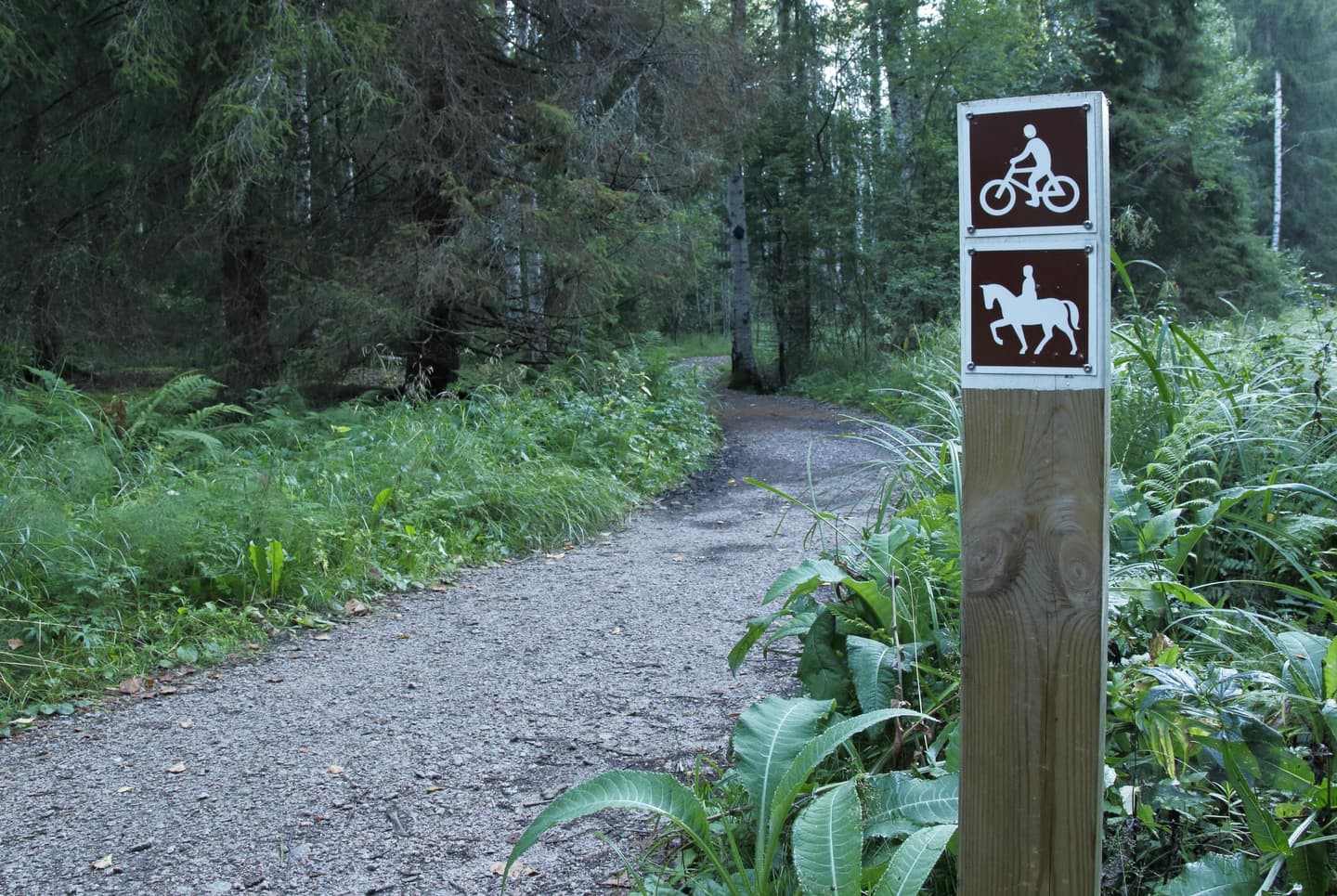
National parks may have routes designated for horse riding, shown on the appendices to the park rules and/or on general marked trails where riding is allowed unless specifically prohibited.
Routes designated for horse riding are often not shown on the Luontoon.fi map service, but only in the appendices to the park rules. All park rules can be found in the julkaisut.metsa.fi service, which is linked from the front pages of destinations on Luontoon.fi.
If the park rules state: “Horse riding is allowed only on separately designated routes”, riding is permitted only on those routes.
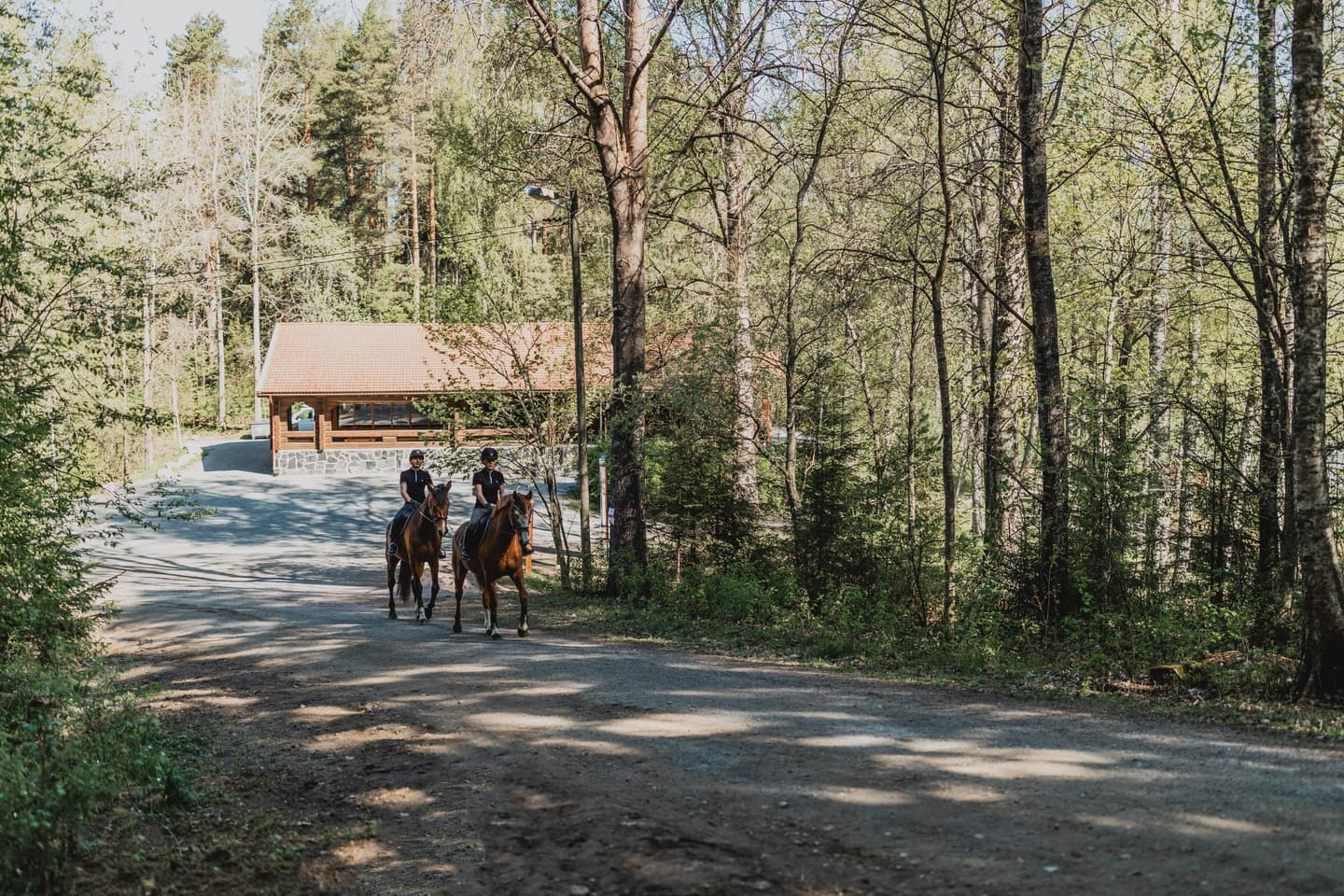
Example: In Sipoonkorpi National Park, the park rules direct horse riding to designated routes. The routes are based on old road alignments, routes used before the establishment of the national park, and indicative routes included in the City of Vantaa’s land-use plans.
In some national parks, horse riding is prohibited. For example, riding is not allowed in Oulanka National Park or Syöte National Park.
In some national parks, riding is restricted and allowed only on designated routes. In Pyhä-Luosto National Park, riding is allowed only on Huttujärventie road. In Pallas-Yllästunturi National Park and Koli National Park, riding routes are available only for partner companies.
Park rules at outdoor destinations vary greatly in age
Older park rules often do not mention horse riding. If riding is not mentioned in the rules, it is generally allowed, unless the list of permitted modes of travel excludes it.
- For example, the 1988 park rules for Tiilikkajärvi allow movement only on foot, skiing, cycling, rowing and canoeing – meaning horse riding is prohibited.
Some national park rules state that riding is allowed only on designated routes, but no such routes have been designated. If the park rules are very old or unclear, riders should check Luontoon.fi and, if necessary, confirm the matter with Metsähallitus Parks & Wildlife.
Many parks are currently updating their management and land use plans, after which the park rules will also be revised.
Summary: what should riders do?
- Always check the national park’s park rules.
- Make sure whether riding is prohibited, allowed or directed to specific routes.
- If riding is not mentioned at all, it is generally allowed unless the permitted modes of travel exclude it.
You can contact Metsähallitus Parks & Wildlife through Luontoon.fi.

Large-scale or continuous horse riding activities, such as riding stables or riding tourism businesses, must be agreed with Metsähallitus Parks & Wildlife through a right-of-use agreement or cooperation agreement.
How is horse riding comparable to mountain biking?
Horse riding and mountain biking are comparable in the sense that both can wear down terrain and trails. For this reason, both may be directed or restricted through park rules.
However, the restrictions are not automatically the same: if mountain biking is prohibited, it does not mean horse riding is prohibited – and vice versa.