Evening observations for local hikers – Eagle-owls and boreal owls can be heard across Finland
The soundscape of the owls’ breeding season is one of the finest nature experiences in nearby nature and can be enjoyed without long journeys, almost right from your doorstep. However, conditions play a major role in how successful an owl outing will be.
On evening walks in late winter and early spring, you may hear something truly special: the deep, resonant “huuuu” breeding call of the Eurasian eagle owl or the steady, rising “pupupu…” rhythm of the boreal owl.
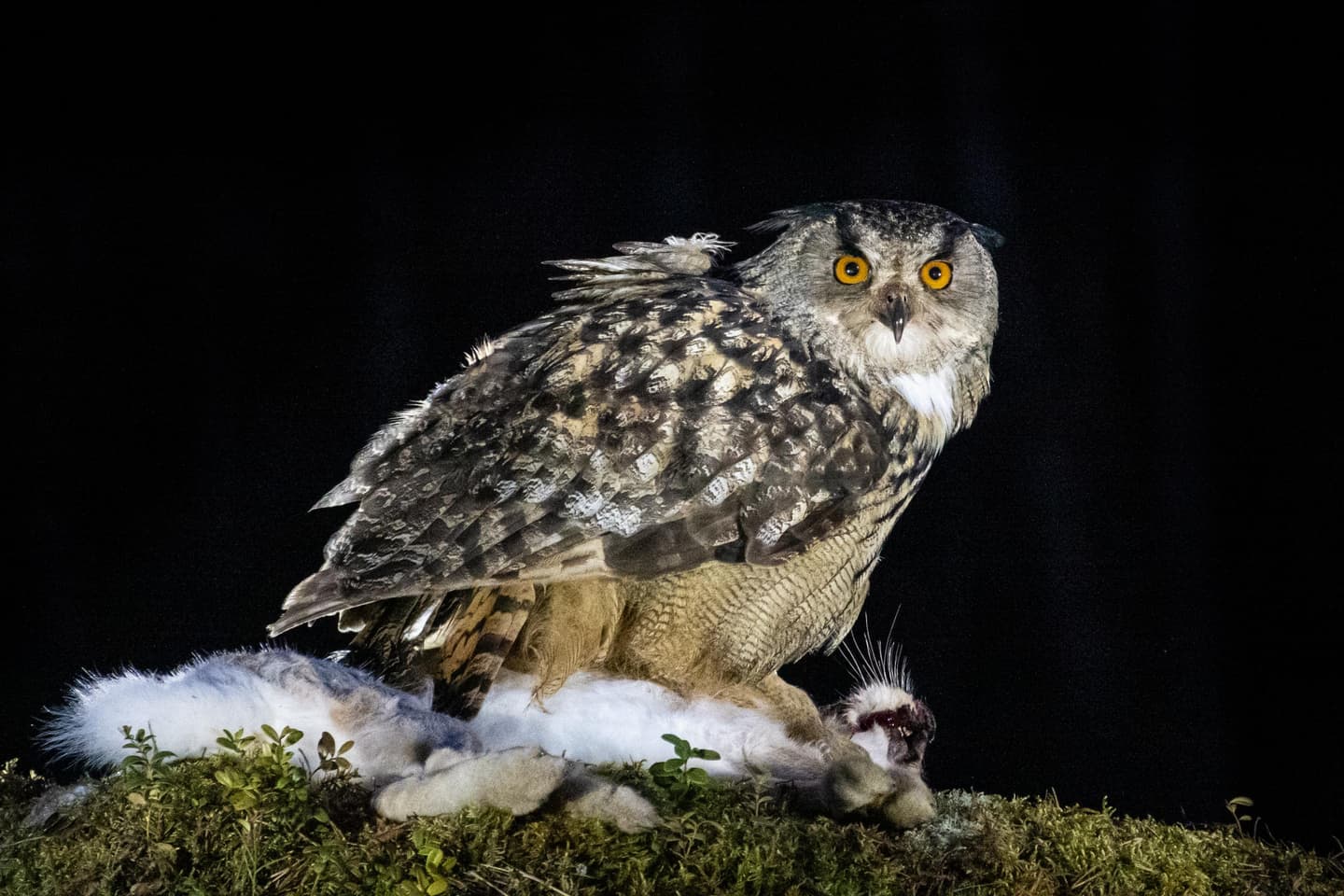
The Eurasian eagle-owl (Bubo bubo) thrives in rocky and peaceful forests in southern and central Finland. Its low breeding call, “huuuu”, is repeated at regular intervals.
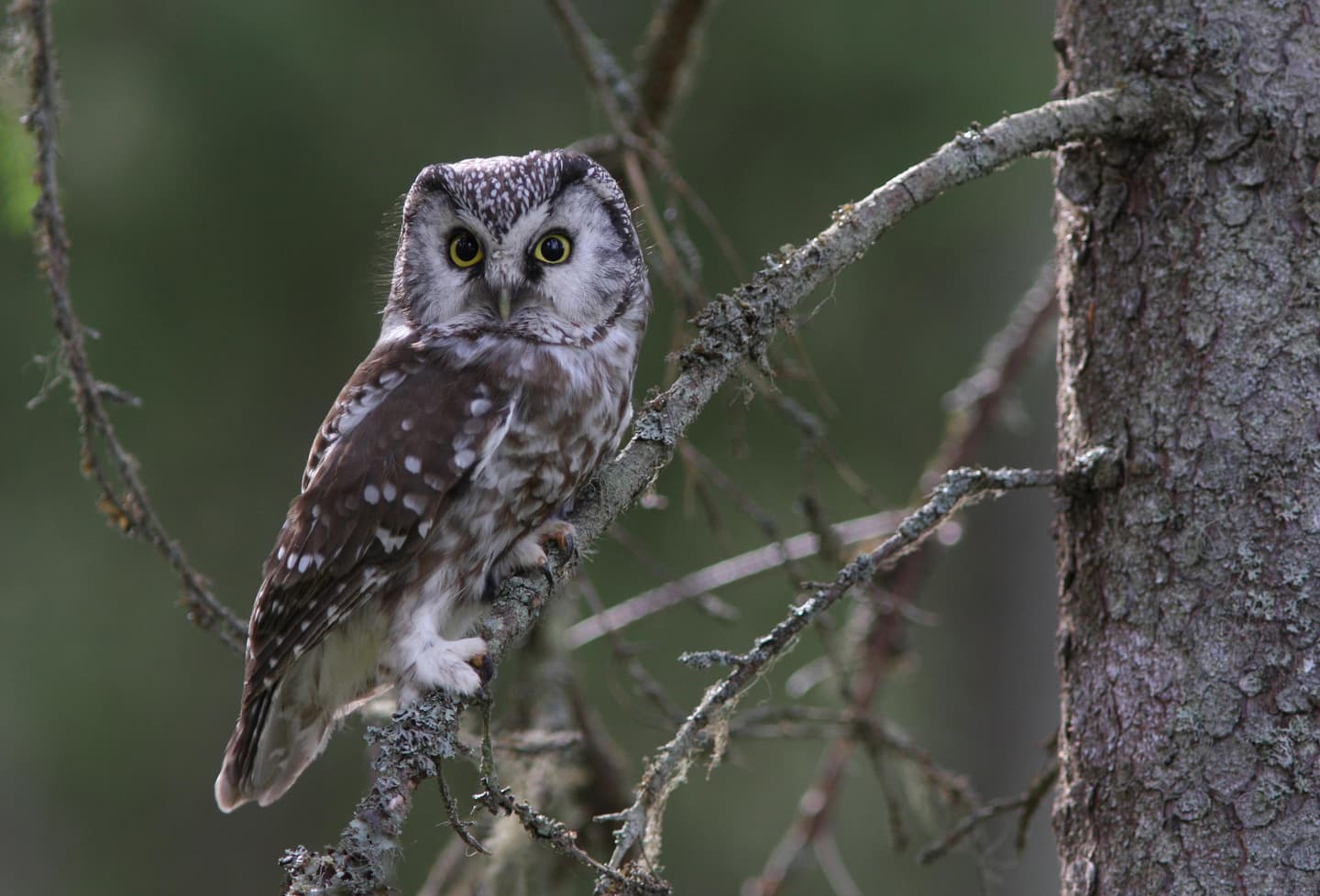
The boreal owl (Aegolius funereus) prefers spruce-dominated forests from southern Finland all the way to central Lapland. Its annual population in Finland varies depending on the current rodent situation. The boreal owl’s breeding call can be heard as a rising, steady series of “pupupupupupupu”, repeated every few seconds.
These distinctive calls carry surprisingly far. In open areas, the calls of both species can be heard from distances of several kilometres.
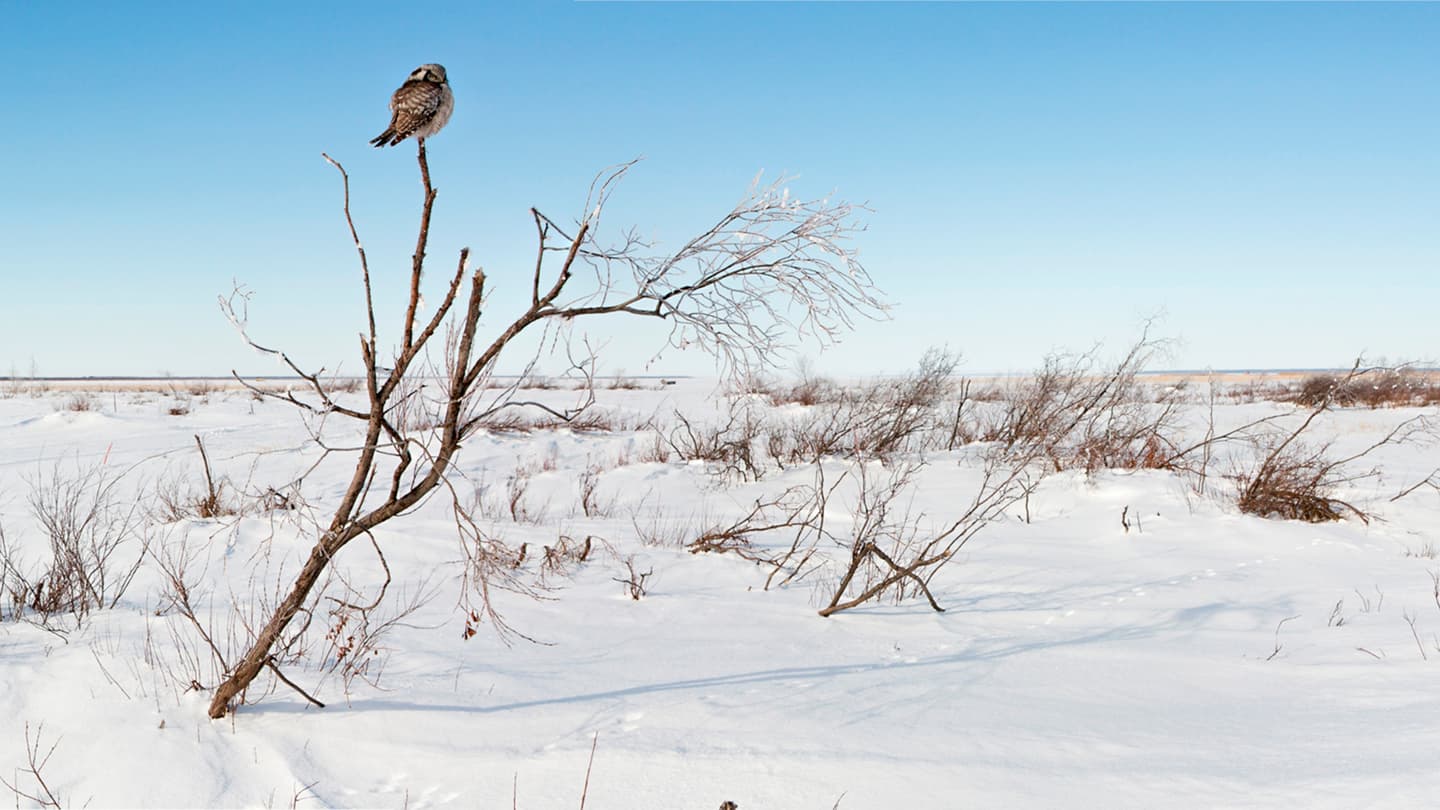
Finland is home to around ten owl species. The boreal owl, Eurasian eagle owl, long-eared owl (Asio otus), short-eared owl (Asio flammeus), Eurasian pygmy owl (Glaucidium passerinum), northern hawk-owl (Surnia ulula), Ural owl (Strix uralensis), tawny owl (Strix aluco) and great grey owl (Strix nebulosa) are all part of our regular fauna. The snowy owl (Bubo scandiacus) breeds in Finland only sporadically, and the number of overwintering individuals has declined significantly from peak years.
Tips for listening to owls
Owls are best heard:
- in the evenings and at night, often between 6 pm and 11 pm and in the early morning hours
- in clear, calm weather, at temperatures above –10°C
- in forest terrain, even in slightly more remote nearby nature areas
- in March–April, partly already from January–February
Local hiking with owls – easy and responsible
Surprisingly often, the calls of an eagle owl or boreal owl can be heard on the edges of cities and towns where there is sufficient forested environment. Remember that birds must never be disturbed while observing them. Simply stop and listen calmly from a distance – this allows the birds to behave naturally.
Listening for owls may require patience. Dress warmly so that you do not get cold while standing still. During the coldest periods, owls are not vocal. If the temperature drops below –10°C, owls will not be heard.
- Move quietly and do not approach the bird too closely. Stay on the trail or by the roadside, for example.
- Stop occasionally to listen – owl breeding calls are rhythmic and repetitive.
- Learn to recognise owl calls before your trip. For example, the call of the long-eared owl closely resembles the hooting of the eagle owl.
- Do not play recordings during your outing. Birds are easily disturbed by recorded sounds. Do not imitate owls yourself to attract them.
- Weather has a major impact: a calm, clear evening is best. Owls are most vocal during clear moonlit nights, although calls can also be heard at other times. Even very light snowfall, barely noticeable to humans, may be too much for owls, as sounds do not carry as well then.

- The symbol of Hiidenportti National Park features a great grey owl chick peeking out.
- The symbol of Riisitunturi National Park shows a northern hawk-owl in a snow-laden spruce forest.
- The symbol animal of Sipoonkorpi National Park is the Eurasian eagle owl.