Outdoor destinations
Search for destination, route or locationThe search starts automatically when at least two characters are entered. Navigate to the search results using the up or down arrow keys.

Read this if you are planning a trip in June to the Kilpisjärvi, Malla, or Käsivarsi region. Please note that the photographs are from 2017, 2020, and 2021.
Summer arrives later in the Käsivarsi high-fell region than in the rest of Finland. At the beginning of June, snow begins to melt across the fells, and meltwater flows rapidly. Visitors are advised to wait a little longer so that summer conditions can reach the higher elevations as well. The onset of summer varies from year to year. The local trails around Kilpisjärvi become accessible first, followed by summer conditions in Malla Strict Nature Reserve, while the snow melts last in the Halti region in Käsivarsi Wilderness.
Tips for monitoring terrain conditions
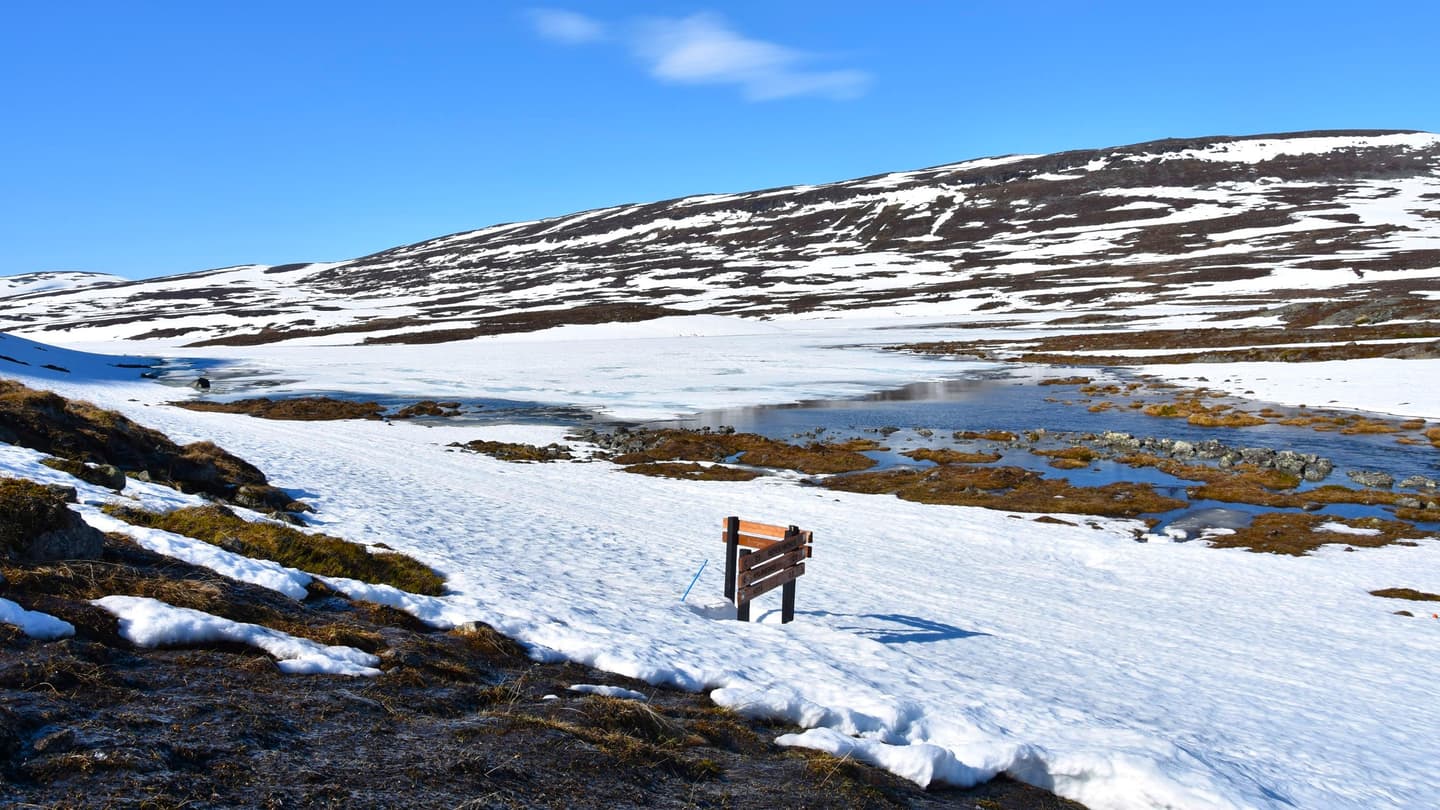
In Kilpisjärvi, short excursions in early June are best undertaken on gravelled trails. Suitable hiking destinations include, for example
There may still be snow on the trail leading to the summit of Saana in early June. Snow often persists at Lake Saanajärvi well into mid-June. It may not be possible to reach the Saanajärven kota campfire huts due to a flooded river crossing. The ice on Lake Saanajärvi melts gradually as the month progresses. An annual Midsummer event, skiing competition, is held on Saana slopes, so snow can still be found in the area even then.
The ice on Lake Kilpisjärvi melts as June progresses. The lower basin of the lake, Ala-Kilpisjärvi, typically thaws earlier than the upper basin. Ice breakup on the lower part of the lake may occur in early June, while only shoreline is open water of the upper basin. In most years, the ice on Kilpisjärvi breaks up around mid-June, although there is long year-to-year variation. In some years, ice has even been observed on the lake as late as Midsummer.
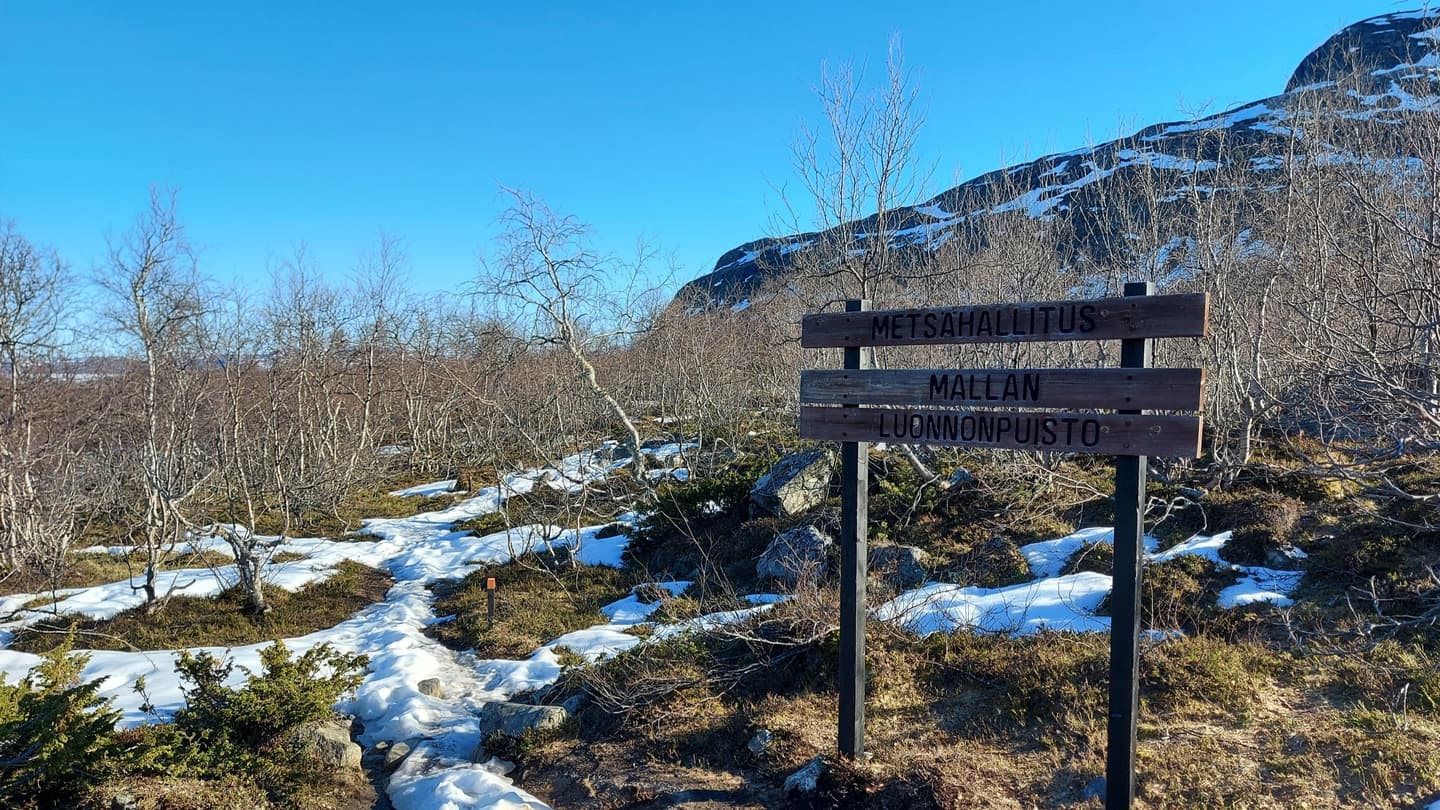
During the summer season, visitors in Malla Strict Nature Reserve may only walk along the marked trail and must not leave it.
Early summer is a challenging time for hiking in the reserve, and walking on wet ground causes wear to the fragile environment. The north-facing slopes may still be covered with deep, soft snow, and trail markings may not be visible. The trail passing thru the reserve may be interrupted by the flooding Kitsiputous waterfall, whose flow increases especially on warm days as snow melts in the higher fells. Crossing the stream may be possible in the morning, but later in the day it may no longer be safe.
It is advisable to head to the Malla trail and the Three-Country Cairn only after the snow has melted and the ice on Lake Kilpisjärvi has broken up. About a week after ice breakup, the Malla boat service might be seen operating on the lake.

The high-fell area in the Käsivarsi Wilderness follows its own seasonal cycle, as snowfields there often melt in late June or early July. The year 2026 has been unusually warm, which is also reflected in the rate of snowmelt. By the first week of June, the southern part of the wilderness area is already largely snow-free, while in the northern high-fell area there is still more snow than exposed ground.
In early June, hiking the Halti trail is not recommended. Snow is typically encountered already at Saarijärvi or at the latest at Kuonjarjoki. The valley surrounding the Meekonjärvi water system becomes snow-free earlier, but the terrain rises toward Halti and snowmelt progresses more slowly. From Pitsusjärvi toward Halti, the landscape may still be dotted with thick snowfields still around Midsummer. River levels are high in early summer, and rainfall can quickly raise water levels further. Hiking boots are not sufficient for wading, and it is likely that your feet will get wet in several icy cold streams. Wet gear and exposure to cold are significant risk factors in early summer.
The Halti hiking trail can typically reach full summer conditions only as the season turns toward July.


